
How Do You Select the Right Camlock Coupling for Your Application
2025-11-24
Having spent over two decades in the industrial fluid handling sector, I have seen firsthand how the right connector can make or break an operation. The choice seems simple, but the wrong Camlock Coupling can lead to leaks, downtime, and even safety hazards. Many clients come to us after facing these exact issues. That is why I want to share a professional’s perspective on selecting the perfect coupling, highlighting why our solutions at Beideli stand up to the toughest demands.
What Are the Key Material Considerations for Your Camlock Coupling
The environment and fluid you are handling dictate the material of your Camlock Coupling. Using the wrong material is a common and costly mistake.
-
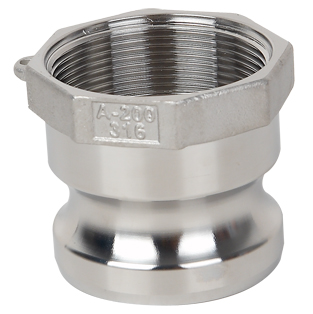
Stainless Steel: Excellent for corrosive chemicals, high-purity applications, and environments requiring frequent sanitization. It offers superior strength and temperature resistance.
-
Aluminum: A lightweight and cost-effective option ideal for fuels, oils, and other non-corrosive fluids. Perfect for applications where portability is key.
-
Polypropylene: Highly resistant to a wide range of acids and bases at lower temperatures and pressures. A great economical choice for many chemical transfer tasks.
At Beideli, we manufacture our couplings in all these materials, ensuring you find the perfect match for your specific media.
Which Coupling Type and Size Ensures a Perfect Seal
A Camlock Coupling is not one-size-fits-all. You must match both the type and size to your existing equipment to ensure a leak-free connection. The standard types are:
-
A Adapter (Male)
-
B Coupler (Female)
-
C Hose Shank
-
D Dust Cap
-
E Dust Plug
Sizing is typically based on the hose or pipe diameter. Here is a quick reference table for our Beideli product line:
| Size (Inch) | Flow Rate (Approx. GPM) | Common Applications |
|---|---|---|
| 1" | 0-80 | Low volume transfer, sampling |
| 1.5" | 80-160 | General purpose, tanker loading |
| 2" | 160-280 | Bulk transfer, agriculture |
| 3" | 280-500 | High-volume water, waste |
| 4" | 500-800 | Large scale industrial, dredging |
Mismatched sizes are a primary cause of connection failure, so always double-check your requirements.
What About Pressure Ratings and Gasket Compatibility
Never overlook the working pressure of your system. A Camlock Coupling must be rated to handle your maximum operating pressure with a safety margin. Our Beideli couplings, for instance, are rigorously tested to exceed standard pressure ratings, providing that critical peace of mind.
The gasket is the heart of the seal. Using the wrong gasket material can lead to degradation and contamination.
-
Nitrile: Standard for most oils, fuels, and water.
-
EPDM: Best for hot water, steam, and certain chemicals.
-
Viton: Excellent for aggressive chemicals and high temperatures.
-
Silicone: Ideal for high-purity and food-grade applications.
Have You Factored in Operational Safety and Ease of Use
Finally, consider the human element. How quickly do your operators need to make connections? Our designs at Beideli focus on intuitive, single-handed operation where possible. Features like our secure locking arms and bright, color-coded handles prevent accidental disconnections and enhance workflow efficiency. A proper Camlock Coupling should make the job safer and faster, not add complexity.
Selecting the right Camlock Coupling is a detailed process, but you do not have to navigate it alone. We have built our reputation on providing not just products, but solutions. If you are still unsure which coupling is the perfect fit for your application, our technical team is ready to assist. Contact us today with your specifications, and let us help you build a safer, more efficient operation. We look forward to your inquiry.