
How Do You Properly Mount and Install Angular Contact Ball Bearings
2026-01-13
Proper installation is paramount to achieving the performance, longevity, and reliability that Angular Contact Ball Bearings are designed for. Incorrect mounting can lead to premature failure, increased noise, and costly downtime. At BMT, with decades of industrial expertise, we understand that precision begins with the installation process. This guide outlines the critical steps and considerations for correctly mounting these precision components.
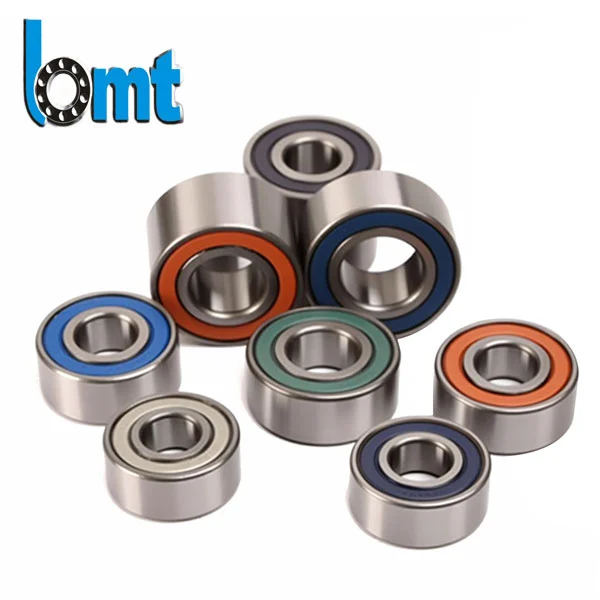
A successful installation hinges on preparation, method, and verification. Follow this procedural checklist:
-
Pre-Installation Inspection: Clean the bearing, shaft, and housing thoroughly. Verify all components for damage or burrs.
-
Environment Control: Perform the installation in a clean, dry, dust-free area to prevent contamination.
-
Tool Preparation: Use dedicated, calibrated tools. Avoid makeshift instruments.
-
Alignment Check: Ensure perfect alignment between the shaft and housing before pressing the bearing.
-
Applying Force Correctly: Apply mounting force only to the ring with the tight fit (usually the inner ring for shaft rotation).
-
Post-Installation Verification: Check for smooth rotation and proper internal clearance.
Understanding the fit is crucial. The table below summarizes typical recommendations:
| Component | Fit Type | Rationale |
|---|---|---|
| Rotating Inner Ring | Interference Fit | Prevents creeping and fretting corrosion on the shaft. |
| Stationary Outer Ring | Clearance Fit | Allows for axial movement during thermal expansion. |
| Adapter Sleeves | Tightening per Torque Spec | Ensures secure clamping on the shaft without over-stressing. |
Angular Contact Ball Bearings FAQ Common Problems
Q: Can Angular Contact Ball Bearings be mounted singly, or are they always in pairs?
A: While single Angular Contact Ball Bearings are used for very high axial loads in one direction, they are most often mounted in pairs (back-to-back, face-to-face, or tandem). This arrangement provides balanced axial load capacity and moment rigidity, which is essential for applications like machine tool spindles. BMT technical catalogs provide detailed guidance on configuring bearing pairs.
Q: What is preload, and why is it critical during installation?
A: Preload is an internal axial load applied to Angular Contact Ball Bearings during installation to eliminate internal clearance. This increases system stiffness, reduces noise and vibration, and improves rotational accuracy. However, incorrect preload can cause overheating and rapid failure. The required preload level depends on the application's speed and load conditions.
Q: How critical is lubrication during the initial mounting phase?
A: It is absolutely critical. Proper lubrication must be applied before mounting to prevent immediate start-up wear and scoring. The initial lubricant film protects the surfaces during the first rotations. Always use the type and grade of lubricant specified for the operating conditions, whether grease or oil.
Mastering the installation of Angular Contact Ball Bearings transforms their theoretical advantages into real-world performance and durability. The meticulous attention to detail in preparation, execution, and verification separates a successful application from a problematic one. BMT's engineering support is built on this foundational knowledge.
For complex installations or to ensure your specific application achieves optimal results, leverage BMT's technical expertise. Contact us today for personalized guidance, premium bearing selection, and engineering support to keep your operations running smoothly.