
How Do You Accurately Measure the Center-to-End Dimension of a Stainless Steel Long Radius Elbow
2026-06-29
For piping engineers, procurement specialists, and fabrication workshops, the center-to-end dimension of a Stainless Steel Long Radius Elbow is not a optional measurement—it is a critical tolerance that determines whether a spool piece fits, whether stress calculations hold, and whether a system passes hydrostatic testing. At HengDi, we handle thousands of Stainless Steel Long Radius Elbow orders annually, and the single most common field error is misinterpreting or mismeasuring this dimension. This guide walks through the professional method, the math, the tools, and the pitfalls.
The Definition You Must Memorize
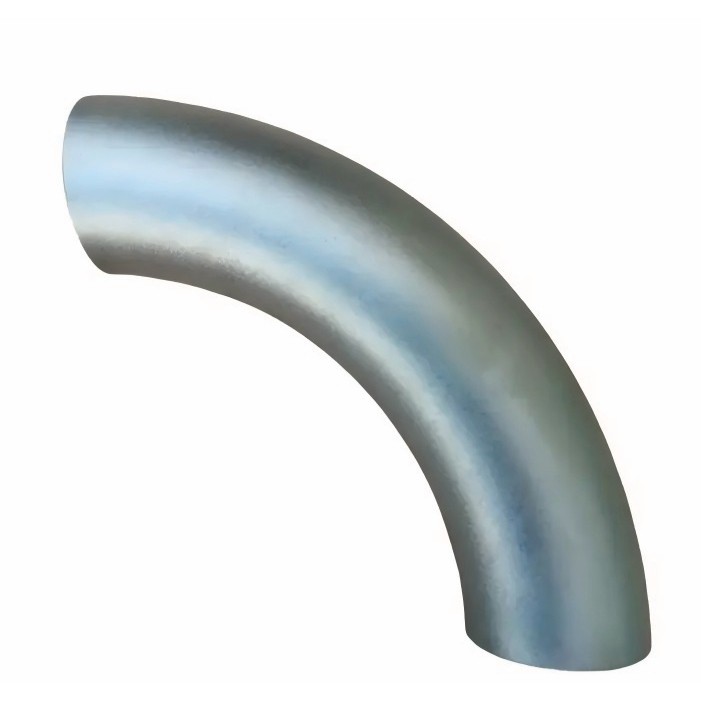
For a 90° Stainless Steel Long Radius Elbow, the center-to-end dimension equals 1.5 × Nominal Pipe Size (NPS) in inches, expressed in millimeters for metric standards. For a 45° elbow, the formula shifts to 1.5 × NPS × tan(22.5°). However, the actual physical measurement on a fabricated fitting requires a clear reference plane—the centerline intersection of the inlet and outlet bores.
Step-by-Step Field Measurement Protocol
| Step | Action | Tool Required | Tolerance per ASME B16.9 |
|---|---|---|---|
| 1 | Lay the Stainless Steel Long Radius Elbow on a flat surface with both ends facing upward | Surface plate / level table | N/A |
| 2 | Insert a rigid bar or dowel into the bore of one end until it contacts the internal tangent point of the bend | Telescoping gauge + caliper | ±0.5 mm for NPS ≤ 4" |
| 3 | Project the centerline of the other end using a combination square set at 45° (for 90° elbows) or 22.5° (for 45° elbows) | Digital protractor | ±0.5° |
| 4 | Measure the perpendicular distance from the face of the second end to the projected centerline intersection | Depth micrometer | ±1.0 mm for NPS > 4" |
| 5 | Repeat three times at 120° rotations around the circumference and average the readings | Marking gauge | Final recorded average |
The Mathematical Check (Avoid the Tape-Measure Trap)
Many technicians simply measure the outer curve length and divide by 1.57—this yields the arc length, not the center-to-end straight projection. The correct verification:
Center-to-End (90°) = (OD – Wall Thickness) × 1.5
(for schedule-matched fittings, use nominal OD from ASME B36.10)
For a 6" NPS Sch. 40 Stainless Steel Long Radius Elbow, the nominal OD is 168.3 mm. The theoretical center-to-end = 168.3 × 1.5 = 252.45 mm. If your physical measurement deviates beyond ±1.5 mm, reject the fitting—it likely originated from a substandard mandrel former.
Why Precision Matters in System Design
-
Stress Analysis: Every 1 mm error changes the moment arm in a cantilevered pipe run, altering natural frequency calculations by up to 8%.
-
Welding Fit-up: An incorrect center-to-end forces fitters to over-gap or under-gap butt welds, directly impacting radiographic test results.
-
Flange Alignment: For flanged long-radius elbows, a 2 mm center error translates to a 3 mm bolt-hole mismatch at the mating flange.
Common Pitfalls from Field Reports
HengDi’s quality team has compiled the top three measurement errors from 200+ site audits:
-
Measuring from the outer heel instead of the bore centerline.
-
Failing to account for the bevel land thickness (for butt-weld ends).
-
Using a flexible tape that sags across the curved section—always use rigid beam calipers.
Stainless Steel Long Radius Elbow FAQ
Q1: Does the center-to-end dimension change if the elbow is manufactured by cold bending vs. hot pushing?
A: Yes. Cold-bent Stainless Steel Long Radius Elbow fittings typically experience springback, which can increase the finished center-to-end by 0.3–0.6% over the nominal value. Hot-pushed elbows (the method used by HengDi for sizes above 10") maintain near-perfect dimensional stability because the material is formed above recrystallization temperature and then air-cooled in a sizing die. Always request the forming method from your supplier—if they cannot provide it, treat the measured dimension with a ±1.0 mm safety buffer for NPS ≥ 8".
Q2: How do I measure the center-to-end dimension on a Stainless Steel Long Radius Elbow that already has welded end caps or flange attachments?
A: You cannot measure directly through the bore once caps are welded. Instead, use an external jig: clamp a precision-ground straight bar across the face of each flange, then use a coordinate measuring arm (CMM) or a laser tracker to pick up the bar’s centerpoints. The distance between those two centerpoints, minus the flange thicknesses, gives you the center-to-end of the bare elbow. For field conditions without a CMM, HengDi recommends a custom go/no-go gauge fabricated from a steel plate with a precisely drilled pin pattern that mimics the nominal centerlines—this gauge takes 10 seconds per check and eliminates human parallax error.
Q3: What is the acceptable deviation for center-to-end when the Stainless Steel Long Radius Elbow is ordered under ASTM A403 WP316L and the project calls for "tight tolerance" (+0/-1 mm)?
A: ASTM A403 does not specify a tighter tolerance than ASME B16.9 (which allows ±2 mm for NPS 10–18). A +0/-1 mm requirement is considered a "special class" dimension and must be explicitly agreed upon in the purchase order. To achieve this, HengDi machines both bevel faces after forming—a secondary operation that adds 15% to production lead time but guarantees every piece falls within +0/-0.8 mm on our CMM inspection reports. We also perform 100% dimensional inspection with a FaroArm® and provide a signed certificate with each shipment. For your project, we strongly advise adding this tolerance clause in writing and requesting a first-article inspection report before mass production begins.
Cost vs. Precision – A Practical Decision
Standard ASME tolerances are perfectly adequate for water, oil, and gas transport. However, for steam services above 400°C or cryogenic LNG lines, every fraction of a millimeter affects thermal expansion calculations. HengDi offers three precision grades:
| Grade | Tolerance | Application | Price Premium |
|---|---|---|---|
| Standard | ASME B16.9 | General process piping | Baseline |
| Precision | ±0.75 mm | Compressor suction/discharge | +12% |
| Ultra | ±0.3 mm | Nuclear / subsea manifolds | +28% |
Final Verification Before Installation
Always perform a dry-run fit-up on two adjacent spool pieces. Place the Stainless Steel Long Radius Elbow between them and measure the total assembly length. Subtract the known straight-pipe lengths—the remainder is your actual center-to-end. If this field-assembled value differs from your shop measurement by more than 1 mm, re-check your square and protractor calibration.
Partner with HengDi for Dimensionally Certified Fittings
Every Stainless Steel Long Radius Elbow leaving our workshop is accompanied by a 3D laser-scan report, material test certificate, and a traceable dimensional log. We stock over 200 sizes from ½" to 48" in 304L, 316L, 310S, and duplex grades—all measured under ISO 17025-compliant conditions.
Contact us today for a certified dimensional drawing of your required schedule and radius. Send your NPS, wall thickness, and end type to our technical sales team, and we will reply within 4 hours with a sealed inspection protocol tailored to your project. Visit our website or email us directly—let HengDi eliminate your measurement uncertainty, one elbow at a time.