
How Do Triangle Connectors Improve Structural Stability?
2026-03-04
Article Summary
Triangle connectors are critical structural components used to reinforce joints, distribute loads evenly, and enhance overall stability in modular constructions and framing systems. This comprehensive guide explains how triangle connectors function, where they are used, and how to select the right type for different applications. By addressing common customer challenges such as weak joints, misalignment, and inconsistent quality, this article helps engineers, buyers, and project managers make informed decisions.
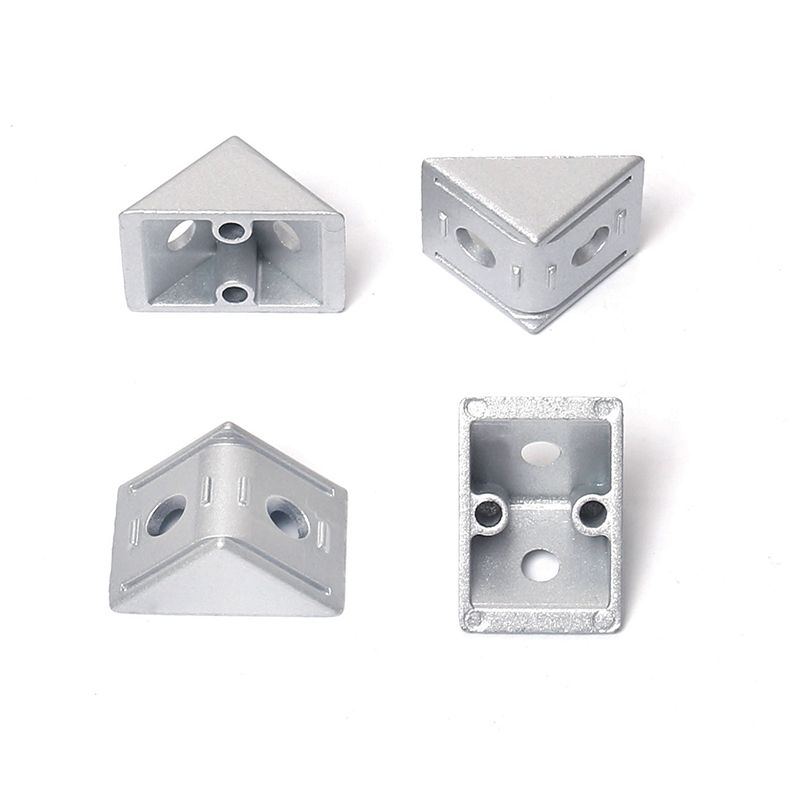
Table of Contents
- Triangle Connectors Overview
- Customer Pain Points in Structural Connections
- How Triangle Connectors Work
- Common Types of Triangle Connectors
- How to Choose the Right Triangle Connectors
- Materials and Manufacturing Standards
- Triangle Connector Comparison Table
- Application Scenarios
- Quality Control and Reliability
- Frequently Asked Questions
- Conclusion and Contact Us
Triangle Connectors Overview
Triangle connectors are mechanical fastening components designed with a triangular geometry to strengthen corner joints and angular connections. Their shape allows forces to be distributed across multiple directions, reducing stress concentration at single points. As a result, triangle connectors are widely used in construction frameworks, shelving systems, exhibition structures, furniture manufacturing, and modular assemblies.
Unlike flat or linear connectors, triangle connectors provide inherent geometric stability. This makes them especially effective in applications where vibration, dynamic loads, or long-term mechanical stress are present. Suzhou Wisdom International Co., Ltd focuses on supplying triangle connectors engineered for durability, precision, and consistent performance across diverse use cases.
Customer Pain Points in Structural Connections
Customers sourcing or using triangle connectors often encounter recurring challenges that affect project safety and efficiency. Understanding these pain points is essential for selecting the correct solution.
- Weak joints that loosen over time
- Uneven load distribution causing deformation
- Inaccurate dimensions leading to installation issues
- Inconsistent material strength between batches
- Corrosion or surface degradation in harsh environments
- Limited compatibility with modular systems
These issues typically stem from improper connector design, poor material selection, or lack of quality control during manufacturing.
How Triangle Connectors Work
The effectiveness of triangle connectors lies in basic structural mechanics. A triangle is the most stable geometric shape, as its sides lock angles in place and prevent distortion. When used at joints, triangle connectors convert applied loads into compressive and tensile forces distributed along the connector edges.
This distribution minimizes localized stress and reduces the risk of joint failure. In practical terms, triangle connectors help maintain alignment, resist bending forces, and improve the overall rigidity of assembled structures, even under repeated loading conditions.
Common Types of Triangle Connectors
Triangle connectors are available in multiple designs to meet different structural and installation requirements.
- Right-Angle Triangle Connectors – Designed for 90-degree corner reinforcement
- Adjustable Triangle Connectors – Allow angle flexibility for custom assemblies
- Flat Plate Triangle Connectors – Used for surface-mounted reinforcement
- Hollow Triangle Brackets – Lightweight yet strong for modular systems
- Heavy-Duty Triangle Connectors – Engineered for high-load industrial applications
How to Choose the Right Triangle Connectors
Choosing suitable triangle connectors requires a systematic evaluation of project requirements. A well-informed selection reduces maintenance costs and enhances long-term safety.
- Load-bearing requirements and safety factors
- Connection angle and structural geometry
- Environmental exposure conditions
- Installation method and available tools
- Compatibility with existing profiles or frames
Suzhou Wisdom International Co., Ltd provides technical support to help customers match triangle connectors with their specific structural and operational needs.
Materials and Manufacturing Standards
Material selection plays a critical role in triangle connector performance. Common materials include carbon steel, stainless steel, aluminum alloys, and galvanized steel. Each material offers different strength, corrosion resistance, and weight characteristics.
Precision manufacturing ensures accurate dimensions and consistent mechanical properties. High-quality triangle connectors are produced using controlled forming, machining, and surface treatment processes to meet international standards and project specifications.
Triangle Connector Comparison Table
| Type | Material | Key Advantage | Typical Use |
|---|---|---|---|
| Right-Angle | Carbon Steel | High rigidity | Frames and shelving |
| Adjustable | Aluminum Alloy | Flexible installation | Modular structures |
| Heavy-Duty | Stainless Steel | High load capacity | Industrial equipment |
| Flat Plate | Galvanized Steel | Corrosion resistance | Outdoor installations |
Application Scenarios
Triangle connectors are used across a wide range of industries due to their versatility and structural benefits.
- Construction and building frameworks
- Exhibition and display systems
- Furniture and storage solutions
- Industrial automation structures
- Modular aluminum profile systems
Quality Control and Reliability
Reliable triangle connectors require strict quality control at every production stage. This includes material inspection, dimensional accuracy checks, load testing, and surface finish evaluation.
Suzhou Wisdom International Co., Ltd implements standardized quality management processes to ensure that every triangle connector meets performance expectations and delivers long-term reliability in real-world applications.
Frequently Asked Questions
Why are triangle connectors stronger than flat connectors?
Their geometric shape distributes loads more evenly, reducing stress concentration at joints.
Can triangle connectors be used outdoors?
Yes, when manufactured from corrosion-resistant materials or treated with protective coatings.
Are triangle connectors suitable for modular systems?
They are widely used in modular assemblies due to their stability and ease of installation.
How do I ensure correct installation?
Follow specified torque values, alignment guidelines, and use compatible fasteners.
Conclusion and Contact Us
Triangle connectors are essential components for building stable, durable, and efficient structural systems. By understanding how they work, selecting the appropriate type, and ensuring quality manufacturing, businesses can significantly enhance structural integrity and reduce long-term risks.
Suzhou Wisdom International Co., Ltd is dedicated to supplying high-quality triangle connectors tailored to diverse industrial and commercial requirements. If you are planning a new project or looking to upgrade your existing connection solutions, contact us today to discuss your needs and discover how our triangle connectors can support your structural goals.