
How Do Temperature Fluctuations Influence the Sealing Integrity of a Double-Press Equal Coupling
2026-05-13
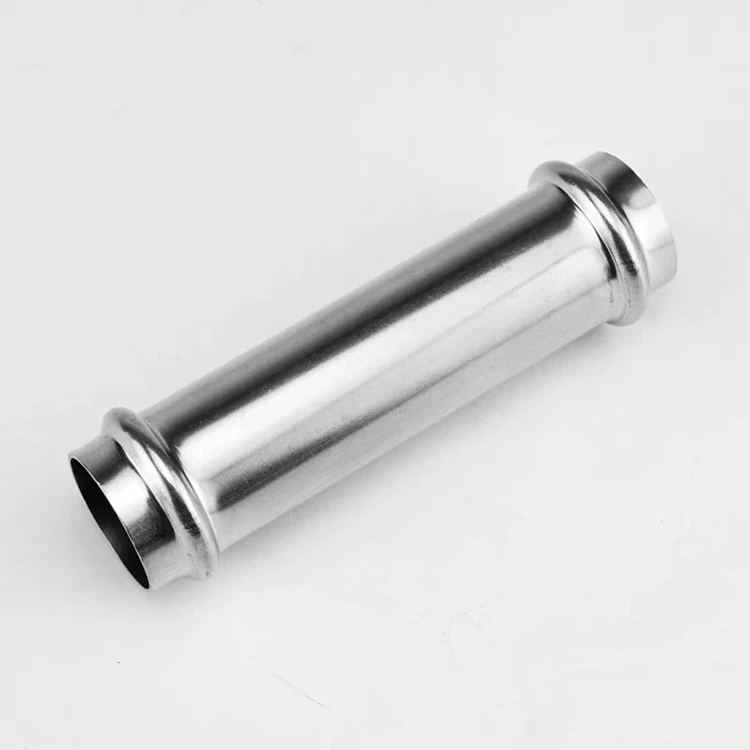
When designing or maintaining press-fit piping systems, engineers must account for thermal dynamics. Temperature fluctuations are a primary stressor that can compromise sealing performance over time. For a Double-Press Equal Coupling, understanding this relationship is critical to ensuring long-term, leak-free operation. Shenchi has developed advanced Double-Press Equal Coupling solutions that address these thermal challenges through precision engineering and robust sealing materials.
How Thermal Expansion and Contraction Affect the Seal
Pipe systems naturally expand when heated and contract when cooled. Repeated cycles cause relative movement between the fitting, the sealing element, and the pipe wall. A Double-Press Equal Coupling relies on two mechanically pressed zones to secure the seal. Temperature swings generate axial and radial forces that can gradually reduce contact pressure. Without proper design, this leads to micro-gaps and eventual leakage.
Comparative Behavior of Sealing Materials Under Thermal Cycles
| Material Type | Response to Temperature Fluctuation | Impact on Double-Press Equal Coupling |
|---|---|---|
| NBR (Nitrile Butadiene Rubber) | Effective from -30°C to +100°C; moderate flexibility loss below zero | Suitable for general HVAC and water applications |
| EPDM | Stable from -50°C to +150°C; excellent recovery after compression | Ideal for extreme temperature fluctuations |
| FKM (Viton) | High heat resistance up to +200°C; less flexible in severe cold | Best for industrial high-temperature loops |
Key Factors That Influence Sealing Integrity Under Temperature Fluctuation
-
Seal material hardness (Shore A): Softer materials conform better under thermal movement but may extrude under pressure.
-
Press depth consistency: Uneven pressing creates localized stress points that worsen with temperature change.
-
Pipe surface condition: Scratches or debris amplify thermal movement effects, accelerating seal wear.
-
Cycle frequency: Rapid heating and cooling cycles degrade elastomer memory faster than gradual changes.
Shenchi incorporates high-grade EPDM seals and CNC-controlled press profiles in every Double-Press Equal Coupling, reducing thermal vulnerability by maintaining uniform compression across both press zones.
Double-Press Equal Coupling FAQ – Common Questions on Temperature Effects
Question 1: Can a Double-Press Equal Coupling be used in outdoor applications with freezing winter temperatures down to -25°C?
Answer: Yes, provided the sealing element is rated for low temperatures. Shenchi Double-Press Equal Coupling models for outdoor use feature EPDM seals tested to -40°C without loss of elasticity. The double-press geometry distributes clamping force evenly, preventing seal hardening or gap formation. However, the pipe material itself must also be freeze-resistant (e.g., stainless steel or copper). Never use NBR seals below -20°C as they become brittle.
Question 2: How do daily temperature fluctuations in a hot water recirculation system affect the service life of a Double-Press Equal Coupling
Answer: Daily cycles of 20°C to 85°C cause gradual relaxation of the initial press force. Laboratory tests indicate that a standard coupling may lose up to 12% of its sealing contact pressure after 5,000 cycles. Shenchi Double-Press Equal Coupling reduces this loss to under 4% by using a dual-compression bead design that maintains residual stress. Expected service life exceeds 25 years in normal residential hot water systems. Annual visual inspection is still recommended.
Question 3: What is the maximum temperature differential a Double-Press Equal Coupling can withstand during a single cycle without seal failure
Answer: For a Double-Press Equal Coupling with EPDM seals, the safe single-cycle differential is 110°C (e.g., from -10°C to +100°C) provided the change occurs over at least 10 minutes. Rapid differentials beyond 60°C per minute may cause localized seal rebound lag, leading to temporary micro-leaks. Shenchi recommends limiting differential to 80°C per cycle for critical gas or chemical lines. In steam-to-chilled water transitions, install expansion loops before the coupling.
Best Practices to Preserve Sealing Integrity Under Temperature Fluctuation
-
Select the correct seal material based on minimum and maximum operating temperatures.
-
Ensure the pipe ends are deburred and clean before pressing a Double-Press Equal Coupling.
-
Use thermal expansion compensators or loops near the coupling when system spans exceed 15 meters.
-
Perform pressure testing at both expected minimum and maximum service temperatures.
Conclusion
Temperature fluctuations directly impact the sealing integrity of press fittings through cyclic expansion, contraction, and seal relaxation. Choosing a Double-Press Equal Coupling from Shenchi provides engineered solutions with verified thermal performance, dual press zones, and high-resilience seals.
Contact us today to discuss your project requirements or request thermal cycle test data for Shenchi Double-Press Equal Coupling products. Our engineering team is ready to assist with sizing, material selection, and installation guidelines.