
How Do Safety Ropes Support Work at Height Across Different Industries?
2026-01-05
Article Summary
Safety Ropes are critical components in fall protection systems used across construction, energy, marine, rescue, and industrial maintenance sectors. This article explains how Safety Ropes function in real-world applications, outlines key technical parameters in a professional format, and addresses frequently asked questions based on practical usage scenarios. The central objective is to clarify selection logic, compliance considerations, and operational reliability while aligning with global search behavior and industry reading habits.
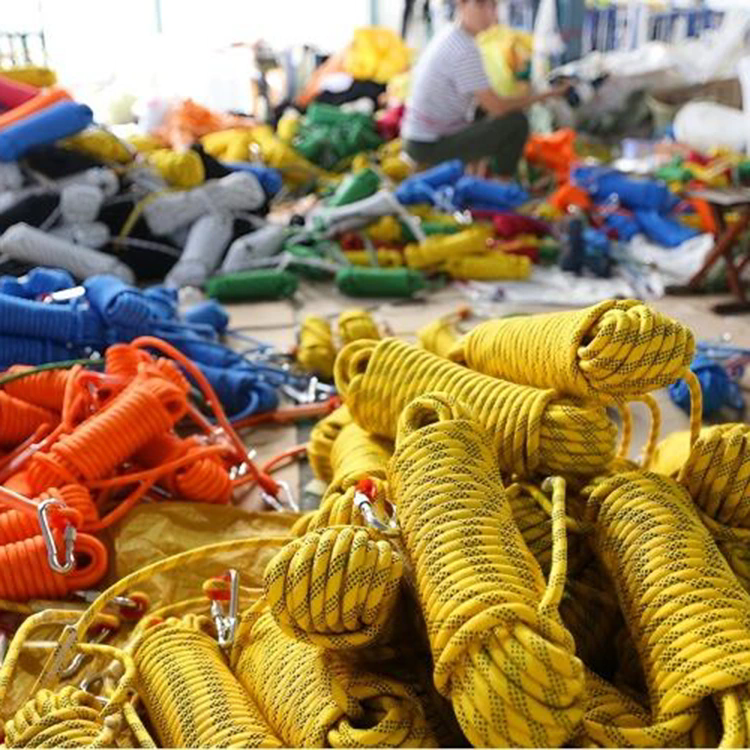
Table of Contents
- Outline
- 1. How Are Safety Ropes Designed for Load Control?
- 2. How Do Safety Ropes Perform in Different Working Environments?
- 3. How Should Safety Rope Parameters Be Evaluated?
- 4. How Can Safety Ropes Be Managed for Long-Term Use?
- Safety Ropes FAQ
Outline
This article is structured into four core sections. The first explains structural and mechanical design principles. The second focuses on application environments. The third details product parameters and evaluation standards. The fourth discusses lifecycle management and procurement considerations.
1. How Are Safety Ropes Designed for Load Control?
Safety Ropes are engineered to provide controlled load-bearing and fall-arrest support for personnel operating at height. The core design principle revolves around tensile strength, elongation behavior, and compatibility with anchorage systems. Unlike general-purpose ropes, Safety Ropes are manufactured using high-performance synthetic fibers such as polyamide, polyester, or aramid blends to ensure predictable mechanical behavior under dynamic loads.
The internal structure typically includes a kernmantle configuration, where the load-bearing core (kern) absorbs primary forces while the outer sheath (mantle) protects against abrasion, UV exposure, and chemical contact. This structure allows Safety Ropes to maintain integrity during repeated stress cycles commonly encountered in industrial operations.
In regulated markets, Safety Ropes are designed in accordance with standards such as EN, ANSI, or ISO, ensuring consistency in performance metrics such as minimum breaking strength and maximum arrest force.
2. How Do Safety Ropes Perform in Different Working Environments?
Safety Ropes are applied across a wide range of environments, each presenting distinct operational challenges. In construction and infrastructure maintenance, ropes are exposed to abrasive surfaces and variable weather conditions. Offshore and marine applications introduce saltwater corrosion and continuous humidity, while rescue operations demand rapid deployment and high flexibility.
To address these variables, Safety Ropes are manufactured with tailored sheath compositions and treatments. Heat resistance is prioritized in welding or steel-structure environments, while low water absorption is critical for marine use. Flexibility and knot retention remain important for rescue and emergency response scenarios.
The adaptability of Safety Ropes across these environments underscores the importance of selecting specifications based on actual working conditions rather than generalized assumptions.
3. How Should Safety Rope Parameters Be Evaluated?
Evaluating Safety Ropes requires a technical understanding of measurable parameters rather than visual inspection alone. Below is a consolidated professional overview of commonly referenced parameters:
| Parameter | Description |
|---|---|
| Diameter | Commonly ranges from 10 mm to 16 mm, influencing grip comfort and device compatibility. |
| Minimum Breaking Strength | Measured in kN, indicating the maximum tensile load before failure under controlled testing. |
| Elongation Rate | Percentage of stretch under load, critical for shock absorption in fall scenarios. |
| Sheath Material | Determines resistance to abrasion, UV radiation, and environmental exposure. |
| Compliance Standard | Certification under EN, ANSI, or ISO standards for regulated market acceptance. |
These parameters should be evaluated collectively, as overemphasis on a single metric may lead to inappropriate product selection for specific operational needs.
4. How Can Safety Ropes Be Managed for Long-Term Use?
Long-term management of Safety Ropes involves inspection, storage, and replacement protocols. Regular visual and tactile inspections help identify sheath damage, core deformation, or chemical contamination. Storage conditions should minimize UV exposure, moisture, and contact with sharp edges.
From a procurement perspective, traceability and batch identification are increasingly important, especially for organizations operating across multiple sites. Consistent documentation supports compliance audits and internal safety governance.
As industrial safety requirements continue to evolve, Safety Ropes are increasingly integrated into system-based solutions rather than treated as standalone components.
Safety Ropes FAQ
How are Safety Ropes different from ordinary industrial ropes?
Safety Ropes are engineered and certified for human load-bearing and fall protection, whereas ordinary ropes are not designed or tested for dynamic arrest forces.
How often should Safety Ropes be inspected?
Safety Ropes should undergo visual inspection before each use and detailed periodic inspections according to internal safety protocols or regulatory requirements.
How is the correct diameter of Safety Rope selected?
Diameter selection depends on compatibility with fall arrest devices, user handling preference, and required strength ratings defined by the working environment.
Conclusion
Understanding how Safety Ropes function within complex safety systems is essential for organizations committed to reducing risk in work-at-height operations. By focusing on engineering principles, application environments, and measurable parameters, decision-makers can align product selection with operational realities.
Within the global safety equipment supply landscape, Yisen continues to support market demand for reliable Safety Ropes by emphasizing consistent manufacturing control and application-driven specifications.
For further technical details, customization options, or application guidance, contact us to discuss specific project requirements and operational scenarios.