
How Do PEX-AL-PEX Fittings Maintain Long-Term Connection Reliability?
2026-09-22
In a multilayer pipe system, the pipe itself rarely fails. The connection is where leaks happen. A PEX-AL-PEX Pipe Fittings that is installed correctly can last 50 years without leaking. The same fitting installed with a worn press jaw, an incorrect insert, or a missing O-ring can fail within months. The reliability of the connection depends on three factors: the mechanical retention between the fitting and the pipe, the integrity of the O-ring seal, and the protection of the aluminum layer at the cut edge. This guide is written for installers and site inspectors who need to understand why connections fail and how to verify them before the wall is closed.
1. What Are the Most Common Failure Modes for PEX-AL-PEX Pipe Fittings?
There are four common failure modes for PEX-AL-PEX Pipe Fittings. The first is O-ring damage during insertion. If the pipe end is not deburred or if the insert is not fully seated, the O-ring can be cut or displaced. The second is insufficient crimp or press force. If the tool is out of calibration or the jaw is worn, the fitting does not compress the pipe enough to create a permanent mechanical joint. The third is aluminum layer exposure. The cut edge of the pipe exposes the aluminum layer to water. If the fitting does not cover the edge completely, the aluminum can corrode, which weakens the pipe and causes a leak. The fourth is thermal movement stress. Multilayer pipe expands and contracts with temperature changes. If the fitting is rigidly anchored and the pipe is not allowed to move, the stress can crack the fitting or pull it off the pipe. The table below shows the frequency of these failure modes based on field data from our customers.
| Failure mode | Frequency | Root cause | Prevention |
| O-ring damage | 35% | Pipe not deburred; insert not seated | Deburr and chamfer pipe end; use correct insert |
| Insufficient press force | 30% | Tool out of calibration; worn jaw | Calibrate tool daily; replace worn jaws |
| Aluminum layer exposure | 20% | Fitting does not cover cut edge | Use fittings with full edge coverage |
| Thermal movement stress | 15% | No expansion compensation | Install expansion loops or sliding clips |
In our factory, we test every batch of PEX-AL-PEX Pipe Fittings for pull-out strength and leak tightness. The pull-out test measures the force required to separate the fitting from the pipe. Our fittings exceed the minimum requirement by 30 percent. We also test the O-ring for compression set after 1,000 hours at 80°C.
2. How Do Press, Slide, and Threaded Fittings Compare in Long-Term Reliability?
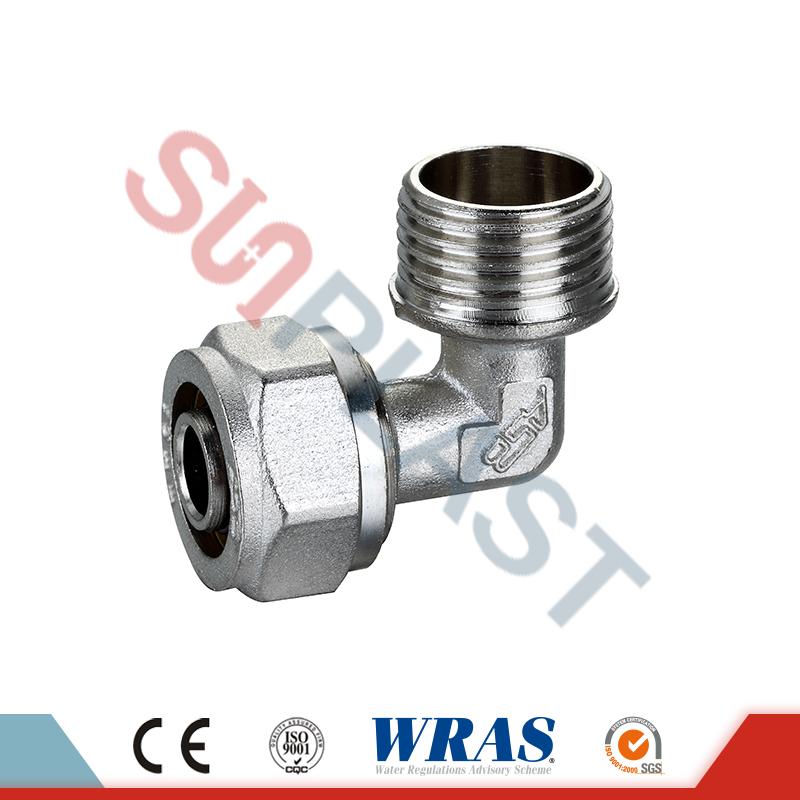
The three main connection methods for PEX-AL-PEX Pipe Fittings are press, slide, and threaded. Press fittings use a metal sleeve that is compressed onto the pipe with a press tool. Slide fittings use a compression ring that is pulled over the pipe with a slide tool. Threaded fittings use a nut and a ferrule that compress the pipe when tightened. The table below compares these methods.
| Connection method | Mechanical retention | Sealing mechanism | Installation speed | Reliability in field |
| Press fitting | Metal sleeve crimped onto pipe | O-ring + metal-to-metal | Fast (10-15 seconds) | High (if tool calibrated) |
| Slide fitting | Compression ring pulled over pipe | O-ring + plastic grip | Moderate (30-45 seconds) | Moderate (sensitive to pipe ovality) |
| Threaded fitting | Nut and ferrule compressed | Ferrule + pipe deformation | Slow (60-90 seconds) | Moderate (requires torque control) |
Ningbo Sunplast Pipe Co., Ltd. manufactures PEX-AL-PEX Pipe Fittings in all three connection methods. Our factory recommends press fittings for most installations because they provide the most consistent result. The press tool has a built-in calibration check, and the fitting has a visual indicator that shows when the press is complete. For tight spaces where a press tool cannot fit, slide fittings are a practical alternative. Threaded fittings are used mainly for transitions to metal pipe or equipment.
3. What Installation Practices Are Critical for Long-Term Reliability?
Three installation practices are critical. The first is pipe preparation. The pipe must be cut square with a rotary cutter, not a hacksaw. The cut edge must be deburred and chamfered. The aluminum layer must not be exposed. The second is insert selection. The insert must match the pipe size and the fitting type. A wrong insert can block the flow or fail to support the pipe. The third is tool maintenance. The press tool must be calibrated according to the manufacturer's schedule. The jaws must be inspected for wear and replaced when the wear limit is reached. The table below shows the inspection intervals recommended by our factory.
| Item | Inspection interval | Acceptance criteria |
| Press tool calibration | Daily (before first use) | Calibration certificate within 12 months |
| Press jaws | Weekly | No visible wear, no cracks, dimension within spec |
| Pipe cutter blade | Monthly | Clean cut, no burrs, no deformation |
| O-ring condition | Every fitting | No cuts, no deformation, properly seated |
| Insert seating | Every fitting | Flush with pipe end, no gap |
In our factory, we provide a training video and a field inspection checklist with every order of PEX-AL-PEX Pipe Fittings. The checklist includes the items shown in the table above. We also offer a tool calibration service for customers who do not have their own calibration equipment.
4. How Should Connections Be Tested Before the System Is Closed?
Pressure testing is the final verification. The test should be performed before the pipes are covered with concrete or drywall. The test pressure should be 1.5 times the working pressure, and it should be held for at least 30 minutes. For a typical domestic water system with a working pressure of 10 bar, the test pressure is 15 bar. The pressure should not drop more than 0.1 bar during the test. If the pressure drops more than this, there is a leak. The leak can be located by listening for the sound of escaping water or by using a leak detection spray. In our factory, we recommend that the test be witnessed by the site inspector and documented with a photo of the pressure gauge. This documentation is often required for warranty claims.
Frequently Asked Questions About PEX-AL-PEX Pipe Fittings Reliability
Summary for Installers and Site Inspectors
The long-term reliability of PEX-AL-PEX Pipe Fittings depends on three factors: the quality of the fitting, the quality of the installation, and the quality of the inspection. The most common failure modes are O-ring damage, insufficient press force, aluminum layer exposure, and thermal movement stress. Press fittings are the most reliable method when installed with a calibrated tool. Pressure testing before the system is closed is the final verification. Ningbo Sunplast Pipe Co., Ltd. has been manufacturing PEX-AL-PEX Pipe Fittings for over 15 years and supplies to plumbing projects worldwide.
Ningbo Sunplast Pipe Co., Ltd. manufactures PEX-AL-PEX Pipe Fittings in press, slide, and threaded configurations. We provide installation training, tool calibration services, and field inspection checklists for all of our products.