
How Do Captive Screws Improve Panel Assembly and Long-Term Serviceability?
2026-09-30
Article Summary
Captive screws are designed for applications where a screw must remain attached to a panel, cover, or enclosure after it is loosened from the mating thread. This simple retained-fastener concept can solve several common manufacturing and maintenance problems, including lost hardware, difficult service access, repeated panel removal, incorrect screw replacement, and loose components entering equipment.For OEMs, engineers, purchasing teams, and equipment manufacturers, selecting the right captive screw involves more than choosing a thread size. Panel thickness, retention method, head style, drive type, material, finish, screw travel, mating thread, installation process, and service frequency all influence the final performance of the assembly.
What Are Captive Screws?
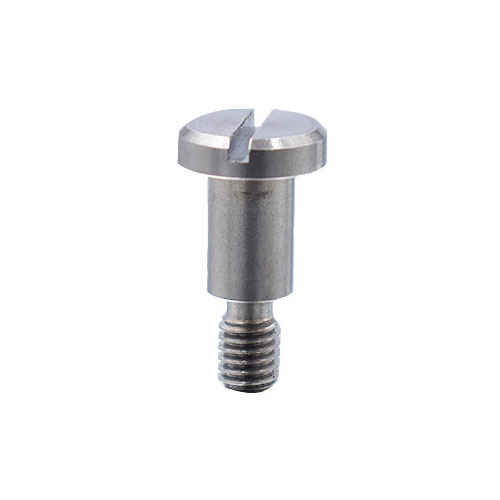
A captive screw is a specially designed fastener that remains physically attached to a panel or component after the screw has been disengaged from its mating thread. Unlike a conventional machine screw, which can be completely removed from an assembly, a captive screw incorporates a retention feature that prevents the fastener from falling away from the panel.
The basic idea is straightforward: the screw should provide reliable clamping when tightened, but remain connected to the panel when loosened. This makes captive screws particularly useful for removable covers, service panels, electrical enclosures, electronic equipment, machinery guards, control cabinets, and other assemblies that require repeated access.
Technical references describe captive screw systems as solutions for retaining fastening hardware in panels, especially where access to the opposite side is restricted or where loose fasteners could create maintenance problems.
How Captive Screws Work
The retention mechanism varies according to the product design. A captive screw may use a reduced-diameter shank, retaining washer, clip, retainer, shoulder, groove, spring mechanism, or another engineered feature. The exact construction depends on the panel material, thickness, required movement, installation method, and application.
In a typical assembly, the threaded portion of the screw engages with a fixed threaded component such as a tapped hole, nut, threaded insert, or receptacle. When the screw is loosened far enough for the threads to disengage, the retention feature prevents the screw from passing completely through the panel.
Fastening
The screw engages the mating thread and clamps the panel securely.
Disengagement
The operator loosens the screw until the threaded portion releases.
Retention
The retaining feature stops the screw from separating from the panel.
Reassembly
The same screw remains available for immediate re-engagement.
Some captive screw systems also incorporate spring-loaded or hold-out functions. These designs can improve accessibility by helping the screw remain positioned for engagement after the panel is released. More specialized versions may provide jacking action or tool-less operation depending on the equipment design.
Problems Captive Screws Can Solve
The value of captive screws is often easier to understand from the customer's problem rather than from the fastener itself. A standard screw may perform perfectly during normal operation but become inconvenient when the panel needs to be removed repeatedly.
1. Lost Fasteners During Maintenance
Technicians often remove several screws before servicing an enclosure. If the screws are placed separately, they can be misplaced, mixed with other hardware, or accidentally dropped. A captive screw keeps the fastener associated with the correct panel.
2. Difficult Service in Restricted Areas
Equipment installed in cabinets, racks, vehicles, machines, or other confined spaces may provide very limited room for handling loose hardware. Retained screws can reduce the number of separate components the technician needs to manage.
3. Risk of Loose Hardware Entering Equipment
A dropped metal screw inside electrical or mechanical equipment can create an unwanted foreign object. Captive designs reduce the chance that a service screw will completely separate from the panel during normal disassembly.
4. Repeated Opening and Closing
Where an enclosure is frequently opened for inspection, calibration, repair, wiring changes, or component replacement, retaining the fastener can make the service procedure more organized and repeatable.
- Reduced handling of loose screws
- Better association between fastener and panel
- Convenient repeated panel access
- Lower risk of misplaced service hardware
- Cleaner and more controlled maintenance procedures
Major industrial fastener manufacturers similarly identify reduced loose-part handling, easier panel servicing, and improved hardware retention as important reasons for using captive screw systems.
Key Design Factors
One of the most common sourcing mistakes is specifying only the thread size and overall length. Captive screws are part of a complete fastening system, so the surrounding panel and mating hardware must also be considered.
| Design Factor | Why It Matters | Typical Consideration |
|---|---|---|
| Thread | Determines compatibility with the mating component. | Metric, Unified, or customer-specific thread |
| Panel Thickness | Influences the retention geometry and available screw travel. | Actual finished panel thickness |
| Head Style | Affects clearance, appearance, bearing area, and installation. | Pan, flat, socket, knurled, thumb, etc. |
| Drive | Determines how the fastener is installed and serviced. | Phillips, hex socket, Torx, slotted, etc. |
| Material | Influences strength, corrosion resistance, weight, and compatibility. | Stainless steel, carbon steel, brass, aluminum, etc. |
| Finish | Affects appearance, corrosion performance, and environmental suitability. | Plain, passivated, plated, anodized, black oxide, etc. |
The correct specification should also account for screw travel. The fastener needs enough movement to release the panel while remaining securely retained. Technical guidance for captive screws specifically emphasizes ensuring sufficient space for the threaded portion to disengage from the mating female thread.
Materials and Surface Finishes
Material selection should be based on the actual mechanical and environmental requirements of the application rather than on appearance alone.
Stainless Steel
Stainless steel captive screws are widely considered when corrosion resistance, durability, and clean appearance are important. Different stainless grades provide different balances of corrosion resistance, strength, machinability, and cost.
Carbon or Alloy Steel
Steel can provide high mechanical strength and may be suitable for machinery, industrial equipment, and applications where high load capacity is important. Appropriate surface treatment may be required depending on the operating environment.
Brass and Other Copper Alloys
Brass may be selected for electrical, decorative, low-friction, or corrosion-related requirements. The exact alloy should be matched to the application's mechanical and environmental conditions.
Aluminum
Aluminum can be useful where low weight is important. It may also be anodized or otherwise finished to meet specific appearance or environmental requirements.
Common Industrial Applications
Captive screws are especially useful when equipment panels must be opened but the fastening hardware should remain associated with the panel. Their applications span electronics, industrial machinery, electrical equipment, transportation systems, and other serviceable products.
Electrical Enclosures
Access covers, terminal covers, control cabinets, and service panels.
Electronic Equipment
Equipment housings, removable covers, rack-mounted products, and control interfaces.
Industrial Machinery
Inspection covers, machine guards, service panels, and removable access plates.
Telecom Equipment
Cabinets and equipment requiring regular inspection or field servicing.
Test Equipment
Calibration panels, instrument covers, and frequently accessed housings.
Transportation Equipment
Selected equipment covers and serviceable electronic or mechanical panels.
Captive fasteners are also used in aerospace and transportation-related products, where retained hardware can support repeated access and reduce loose-part handling. Specialized designs may include spring loading, different head profiles, hold-out functions, or jacking features for specific panel requirements.
Captive Screw Selection Guide
Before requesting a quotation, prepare the engineering information that directly affects the fastener design. This can significantly reduce communication time and prevent incorrect samples.
- Define the application: Explain what the panel or cover is used for and how often it will be removed.
- Confirm the panel thickness: Provide the actual material thickness rather than an approximate value.
- Specify the thread: Identify the thread standard, nominal diameter, pitch, and required engagement.
- Choose the head and drive: Consider tool accessibility, available clearance, torque requirements, and appearance.
- Determine retention: Identify whether a retaining washer, reduced shank, clip, flange, spring, or another mechanism is required.
- Select material and finish: Consider corrosion exposure, temperature, mechanical load, and appearance.
- Define the service movement: Specify how far the screw needs to travel after thread disengagement.
- Confirm installation: Determine whether the component will be installed manually, with a press, by swaging, or through another assembly process.
| Customer Information | Recommended Details |
|---|---|
| Drawing | 2D drawing, 3D model, or dimensioned sketch |
| Thread | Size, pitch, standard, and tolerance |
| Panel | Material, thickness, hole size, countersink if applicable |
| Environment | Indoor/outdoor, humidity, chemicals, temperature, vibration |
| Quantity | Prototype, small batch, recurring production, or mass production |
Installation Considerations
A correctly designed captive screw can still perform poorly if the panel preparation or installation process does not match the fastener design. Installation requirements depend on the retention method.
Panel Hole Accuracy
Hole diameter and geometry should be controlled according to the manufacturer's specification. An incorrect hole can affect retention, alignment, panel movement, or the final appearance.
Panel Hardness and Material
Press-in and self-clinching systems are particularly sensitive to the relationship between fastener geometry and panel material. Self-clinching fasteners generally rely on controlled deformation of the panel material around a retaining feature, so the panel material and installation force must be appropriate.
Thread Alignment
The captive screw must align properly with the mating thread. Misalignment can increase installation torque, accelerate thread wear, or cause cross-threading. The panel design should therefore provide appropriate clearance and alignment.
Service Clearance
Check the complete movement path of the screw. The screw should be able to disengage from the mating thread while the retention feature continues to hold it securely to the panel.
Quality and Custom Manufacturing
For OEM projects, the most important question is often not simply whether a supplier can manufacture a screw, but whether the supplier can consistently manufacture the complete specification.
This includes dimensional accuracy, thread quality, retention geometry, surface finish, material consistency, and functional performance. For captive screws, functional inspection is particularly important because dimensional conformity alone does not necessarily prove that the screw will remain properly retained during service.
Ningbo Frienden Precision Components Co., Ltd provides precision component and fastening solutions for customers requiring customized components and production support. Its product range includes various screw and precision fastening solutions, making custom drawings and application-specific specifications important starting points for engineering communication.
The company's related precision-component information also indicates capabilities covering materials such as stainless steel, aluminum, brass, carbon steel, and engineering plastics, along with machining and surface-finishing options for different component requirements.
For a custom captive screw project, a useful quotation package should ideally include:
- Technical drawing or 3D CAD model
- Thread specification
- Overall dimensions
- Panel thickness and hole dimensions
- Material grade
- Surface treatment or finish
- Required captive travel
- Head and drive style
- Annual or batch quantity
- Inspection or documentation requirements
- Application environment
The more complete the technical information, the easier it is for the manufacturer to evaluate tooling, process requirements, inspection methods, and production feasibility before samples are made.
Captive Screws vs. Conventional Screws
| Feature | Conventional Screw | Captive Screw |
|---|---|---|
| Remains attached after loosening | No | Yes, when correctly installed |
| Loose-part management | Required | Reduced |
| Repeated panel servicing | Possible | Particularly suitable |
| Design complexity | Usually lower | Usually higher |
| Panel integration | Basic threaded fastening | Requires compatible retention design |
The choice therefore depends on the application. A captive screw is most valuable when retained hardware provides a practical advantage during assembly, maintenance, or repeated access.
Frequently Asked Questions About Captive Screws
What is the main purpose of a captive screw?
The main purpose is to keep the screw attached to a panel or component after it has been loosened from the mating thread. This helps reduce lost hardware and simplifies repeated access for service or maintenance.
Can captive screws be customized?
Yes. Customization may include thread size, length, reduced-shank dimensions, head style, drive type, material, finish, panel thickness, and retention method. A technical drawing is the best starting point for a custom quotation.
What materials can be used for captive screws?
Common choices include stainless steel, carbon steel, alloy steel, brass, aluminum, and other engineering materials. The appropriate material depends on strength, corrosion exposure, weight, temperature, electrical requirements, and cost.
Are captive screws suitable for electrical enclosures?
They can be suitable for removable electrical enclosure panels where retained hardware is useful during service. However, the complete enclosure design must still satisfy its electrical, mechanical, sealing, clearance, and safety requirements.
Does a captive screw guarantee an IP-rated enclosure?
No. Captive retention and ingress protection are different functions. An IP rating depends on the complete enclosure system, including panel geometry, gasket compression, fastener arrangement, sealing surfaces, and other design factors.
What information should be provided when requesting a quotation?
Provide a drawing or CAD model, thread specification, dimensions, panel thickness, material, finish, head and drive type, retention method, required quantity, application environment, and any inspection or certification requirements.
Why is captive screw travel important?
The screw must travel far enough to disengage from the mating thread and release the panel while still being safely retained. Insufficient travel can prevent complete panel removal, while unsuitable retention geometry can affect assembly reliability.
Can captive screws be used for high-volume production?
Yes. Captive screws can be produced for prototype, small-batch, and high-volume applications when the design, tooling, material, inspection requirements, and production process are appropriately defined.
A Small Fastener Can Make a Big Difference in Serviceability
Captive screws are more than a modified version of a standard machine screw. They are part of a fastening system designed around a very practical requirement: the panel needs to open, but the screw needs to stay with it.
When properly specified, captive screws can simplify maintenance, reduce loose hardware, improve service organization, and support repeated access to equipment. The best result comes from considering the entire system—panel thickness, retention mechanism, thread, screw travel, head style, material, finish, installation method, and service environment—rather than selecting the fastener based on thread size alone.
For OEMs and engineering teams developing a new enclosure, machine cover, electrical cabinet, electronic housing, or service panel, early consultation with the manufacturer can also help identify potential dimensional or installation issues before mass production begins.
Need Captive Screws for Your Next Project?
Whether you need a standard captive screw or a fully customized precision fastener, the right specification starts with your actual application. Share your drawing, dimensions, material requirements, panel thickness, and estimated quantity with our team for a more accurate solution.
Ningbo Frienden Precision Components Co., Ltd can support customers looking for precision fastening and component solutions tailored to specific engineering requirements.
Contact Us for a Custom Solution