
How Can an Automotive Camera LCD Bracket Injection Mold Improve Precision and Customization?
2026-08-25
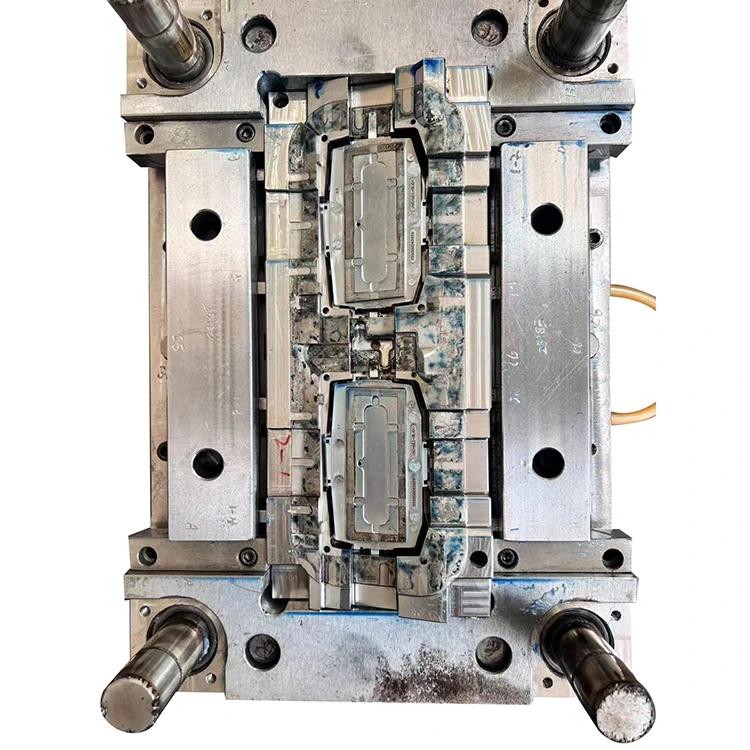
As automotive electronics become increasingly integrated, camera modules, LCD displays, sensors, and intelligent driving systems require reliable structural components to maintain accurate positioning. The Automotive Camera LCD Bracket Injection Mold is specifically developed to produce these precision plastic brackets, supporting stable installation, dimensional consistency, and efficient mass production. For automotive manufacturers and component suppliers, choosing a mold partner with strong engineering capabilities is essential to achieving both functional performance and production efficiency. Cixi Tengrui Mould Manufacturing Co., Ltd. specializes in precision injection molds and customized automotive plastic components, providing tailored mold solutions for different camera and LCD bracket structures.
Why Is an Automotive Camera LCD Bracket Injection Mold Important?
An automotive camera or LCD bracket may appear to be a relatively simple plastic component, but its dimensional accuracy can directly influence the positioning and stability of the electronic module installed on it.
For camera applications, the bracket needs to maintain the camera at the intended angle and position. For LCD systems, it must provide stable support and accurate mounting points so that the display can be assembled correctly with surrounding components.
A high-quality Automotive Camera LCD Bracket Injection Mold can help manufacturers achieve:
-
Consistent dimensions between production batches
-
Accurate mounting holes and locating features
-
Stable support for cameras and displays
-
Reduced deformation and assembly problems
-
Efficient high-volume injection molding
-
Improved product appearance and repeatability
Modern automotive bracket molds may also require sliders, lifters, optimized gates, and carefully designed cooling systems when the component contains complex ribs, holes, clips, or undercut structures.
What Role Does the Mold Play in Automotive Camera and LCD Systems?
The mold determines the basic geometry and repeatability of the finished bracket. During injection molding, molten plastic fills the cavity and forms the required structure. The mold must then cool the material evenly and release the finished component without damaging critical features.
| Mold Element | Main Function |
|---|---|
| Core & Cavity | Defines the bracket geometry |
| Slider / Lifter | Forms complex side features and undercuts |
| Cooling System | Controls temperature and helps reduce deformation |
| Ejection System | Removes the molded bracket safely |
| Runner & Gate | Controls plastic flow into the cavity |
| Mold Steel | Provides durability and dimensional stability |
For automotive electronic brackets, engineering details such as draft angle, gate position, wall thickness, parting line, and cooling balance should be considered before machining begins. These decisions can significantly influence cycle time, appearance, dimensional stability, and mold maintenance.
How Does Precision Injection Molding Improve the Final Product?
Precision is one of the most important advantages of injection molding for automotive brackets. A bracket with inconsistent dimensions may create assembly difficulties, excessive clearance, component interference, or inaccurate positioning.
For camera-related applications, positioning accuracy is particularly important because the camera needs to maintain its designed field of view. For LCD brackets, accurate mounting points help ensure proper integration with the dashboard or display assembly.
Injection molding also provides strong production consistency. Once the mold has been properly developed and validated, the same cavity can repeatedly produce components with highly consistent geometry, making it suitable for automotive mass production.
Materials such as ABS, PC/ABS, PA, PBT, and glass-fiber-reinforced engineering plastics may be selected according to the required mechanical strength, heat resistance, dimensional stability, and application environment.
Which Design Features Should Be Considered?
A successful Automotive Camera LCD Bracket Injection Mold begins with product analysis rather than simply machining the mold according to a drawing.
Important considerations include:
-
Part Geometry
Ribs, bosses, mounting holes, clips, and locating structures should be analyzed for manufacturability. -
Material Selection
The selected plastic should match the required strength, temperature resistance, impact performance, and dimensional stability. -
Gate Location
Proper gate positioning helps control filling, shrinkage, weld lines, and internal stress. -
Cooling Design
Balanced cooling is important for controlling warpage and maintaining dimensional accuracy. -
Ejection Design
Ejector pins and other mechanisms should remove the part smoothly without damaging functional or cosmetic surfaces. -
Mold Maintenance
Wear-prone components should be designed for practical inspection, replacement, and servicing.
For complicated camera brackets, advanced mold structures may incorporate multiple sliders and lifters to form side holes, undercuts, and other difficult features.
What Makes Custom Mold Design More Valuable?
Not every vehicle platform uses the same camera location, LCD structure, mounting method, or available installation space. Therefore, an off-the-shelf mold is rarely the ideal solution for a specific automotive project.
Cixi Tengrui Mould Manufacturing Co., Ltd. supports customized mold development according to customer drawings, 3D data, material requirements, production volume, and assembly conditions.
This customized approach can cover:
-
Different bracket dimensions
-
Customized mounting holes
-
Different camera angles and positioning structures
-
Special clips, ribs, bosses, and locating features
-
Single-cavity or multi-cavity configurations
-
Different plastic materials
-
Customized surface textures and finishes
-
Special runner, gate, slider, and lifter structures
-
Prototype-to-mass-production mold development
The ability to customize the mold is particularly valuable when customers are developing new vehicle models or redesigned camera and LCD systems.
How Can Cixi Tengrui Support Customized Automotive Projects?
Cixi Tengrui Mould Manufacturing Co., Ltd. focuses on precision injection mold design and manufacturing, injection molding, and customized plastic products. Its automotive mold experience includes camera brackets and other automotive electronic and structural components.
The company can work from customer-provided drawings or 3D files and develop the mold structure around the actual product requirements. This helps reduce the risk of designing a mold that is difficult to manufacture or unsuitable for the customer's injection molding process.
A typical project can include:
Product Analysis → Mold Design → Steel Preparation → Precision Machining → EDM → Mold Assembly → Trial Injection → Inspection → Optimization → Final Delivery
This engineering-oriented process helps connect product design with practical production requirements.
What Are the Practical Benefits for Manufacturers?
A well-designed Automotive Camera LCD Bracket Injection Mold can deliver benefits throughout the production cycle.
1. Stable Product Quality
Consistent cavity dimensions help produce brackets with repeatable geometry, supporting reliable downstream assembly.
2. Higher Production Efficiency
A properly optimized mold can support stable cycle times and reduce unnecessary manual finishing.
3. Lower Long-Term Production Costs
Although precision tooling requires an initial investment, a durable mold can support repeated production over a long service life, helping distribute tooling costs across large production volumes.
4. Better Assembly Compatibility
Accurate mounting features make it easier to integrate cameras, LCD modules, PCBs, clips, screws, and surrounding components.
5. Greater Design Flexibility
Customized tooling allows manufacturers to develop brackets around their actual vehicle architecture instead of compromising the product design around a generic mold.
How Does Customization Create a Competitive Advantage?
For automotive suppliers, customization is more than changing the size of a mold. It means developing the tooling around the customer's complete production objective.
For example, a customer may require a lightweight bracket with reinforced ribs, specific mounting holes, a particular surface texture, or a complex side structure. Instead of forcing the design into a standard mold configuration, the tooling can be engineered specifically around these requirements.
This is where the customized service offered by Cixi Tengrui Mould Manufacturing Co., Ltd. becomes valuable. The company can adapt mold structures to different automotive camera and LCD bracket designs, helping customers move from concept and engineering data toward stable production.
What Should Buyers Check Before Selecting a Mold Supplier?
Before ordering an Automotive Camera LCD Bracket Injection Mold, buyers should evaluate more than the initial quotation.
Consider the following checklist:
-
Automotive mold engineering experience
-
Precision machining capability
-
Experience with engineering plastics
-
Mold-flow and manufacturability analysis
-
Slider and lifter design capability
-
Quality inspection procedures
-
Trial molding and adjustment services
-
Customized mold development
-
Communication and technical support
-
After-sales maintenance support
The right supplier should understand not only how to manufacture a mold, but also how the finished plastic component will be assembled and used.
How Can the Right Mold Improve Automotive Production?
The real value of an injection mold is reflected in the finished part and the stability of the production process. A carefully engineered mold can help manufacturers reduce dimensional variation, improve assembly consistency, shorten production interruptions, and achieve more predictable mass production.
For camera and LCD brackets, these advantages become especially important because the plastic component is part of a larger electronic assembly where positioning and structural stability matter.
As automotive electronics continue to evolve, the demand for compact, lightweight, precise, and highly customized plastic components is expected to grow. A professional Automotive Camera LCD Bracket Injection Mold can therefore become an important part of an automotive supplier's tooling strategy.
Conclusion
The Automotive Camera LCD Bracket Injection Mold is more than a tool for forming plastic. It is a critical production foundation for achieving dimensional consistency, structural stability, efficient manufacturing, and reliable integration of automotive camera and LCD systems.
With precision mold manufacturing capabilities, automotive application experience, and a strong focus on customization, Cixi Tengrui Mould Manufacturing Co., Ltd. can provide tailored solutions for different bracket structures, materials, cavity configurations, and production requirements. The company emphasizes customized support so customers can develop molds according to their own product designs rather than relying on standardized tooling.
If you are developing a new automotive camera bracket, LCD mounting bracket, or integrated electronic support component, contact us to discuss your drawings, 3D data, material requirements, and production targets. Cixi Tengrui Mould Manufacturing Co., Ltd. is ready to provide a customized Automotive Camera LCD Bracket Injection Mold solution designed around your project requirements.