
Does a Phillips Bugle Head Drywall Screw Drilling Point Require a Specific Driver Bit Size to Avoid Cam-Out
2026-07-13
For contractors and drywall finishers, few frustrations match the sound of a driver bit slipping prematurely from a screw head. This phenomenon, known as cam-out, not only damages the fastener but also wastes time, mars the drywall surface, and leads to inconsistent countersinking. When working with a Phillips Bugle Head Drywall Screw Drilling Point, the question of driver bit compatibility is not merely a matter of convenience—it is a critical factor affecting joint integrity and installation speed.
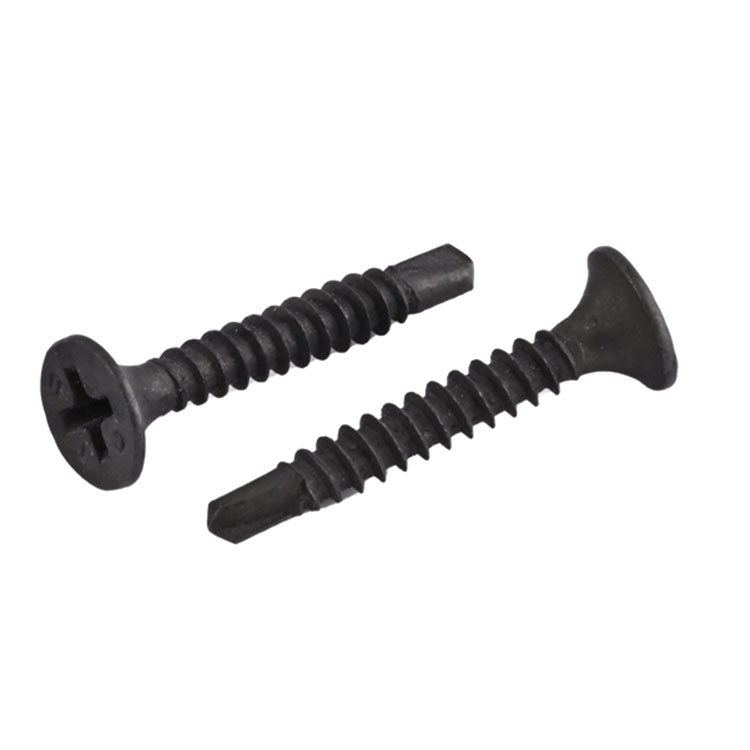
The short answer is yes. A Phillips Bugle Head Drywall Screw Drilling Point does require a specific driver bit size to minimize cam-out, but the solution goes beyond simply choosing a #2 or #3 Phillips bit. Understanding the engineering behind the recess, the bit wear tolerance, and the torque requirements of the drilling point itself is essential for professional results.
The Engineering Behind the Recess and Drilling Point
Unlike standard wood screws, the Phillips Bugle Head Drywall Screw Drilling Point features a unique head geometry. The bugle shape is designed to self-countersink into the drywall paper without tearing it, while the drilling point allows penetration into light-gauge steel or wood studs without a pilot hole. This dual function generates significant rotational resistance.
The Phillips recess is intentionally tapered. When a correctly sized bit engages fully, it creates four contact points that transfer torque efficiently. However, if the bit is undersized (e.g., using a worn #1 bit in a #2 recess), the contact points become line contacts instead of area contacts. This drastically reduces the grip, causing the bit to ride up and out of the recess under load—exactly when the drilling point encounters the densest part of the stud.
Recommended Bit Sizes for Different Screw Gauges
To eliminate cam-out, match the bit size to the screw gauge as follows:
| Screw Gauge | Recommended Phillips Bit Size | Bit Tip Condition | Torque Setting (Clutch) |
|---|---|---|---|
| #6 | #1 (rare) or #2 (short) | Sharp, unworn | 4–6 |
| #7 | #2 | Sharp, unworn | 5–7 |
| #8 | #2 | Sharp, unworn | 6–8 |
| #10 | #3 | Sharp, unworn | 8–10 |
| #12 | #3 | Sharp, unworn | 10–12 |
For the vast majority of residential and commercial drywall applications, the #8 Phillips Bugle Head Drywall Screw Drilling Point is the industry standard, and it demands a #2 Phillips bit in pristine condition.
Beyond Size: Why Bit Wear and Insertion Angle Matter
Even with the correct size, a worn bit will cause cam-out. The sharp edges of a new #2 bit are designed to bottom out fully in the recess. After driving approximately 500–800 screws, the bit’s edges round off, reducing the effective contact area. At this point, the bit no longer seats properly, and the Phillips Bugle Head Drywall Screw Drilling Point will begin to strip, even if the gauge is correct.
Additionally, the driver’s angle relative to the screw axis must be perpendicular. An off-axis angle of just 5–10 degrees exponentially increases the likelihood of cam-out, as the bit contacts only one side of the recess. When combined with a slightly undersized or worn bit, the drilling point’s resistance becomes insurmountable, leading to frequent bit slippage and damaged screw heads.
Practical Recommendations for Professional Installers
-
Replace bits daily – Treat Phillips bits as consumables. For high-volume projects, change your #2 bit every 1,000 screws.
-
Use magnetic bit holders – They help maintain alignment and reduce wobble, keeping the bit concentric with the screw axis.
-
Adjust clutch settings – Set your drill’s clutch to the lowest setting that still drives the screw flush. Over-torquing accelerates bit wear and encourages cam-out.
-
Invest in high-quality bits – Premium bits from brands like JOIN-fasteners feature hardened steel and precision-ground tips that maintain their geometry longer than generic alternatives.
Phillips Bugle Head Drywall Screw Drilling Point FAQ
Q: Can I use a #1 Phillips bit on a #8 Phillips Bugle Head Drywall Screw Drilling Point if I apply more downward pressure?
A: No. Applying extra downward pressure does not compensate for the size mismatch. A #1 bit is too small to engage the full depth of the #2 recess. The bit will only contact the upper tapered walls, creating a high-risk scenario for cam-out under load. Moreover, excessive downward pressure can deform the drywall paper around the bugle head, compromising the countersink finish. Always use the exact recommended bit size for the screw gauge.
Q: Does the drilling point itself affect cam-out more than the head recess?
A: Indirectly, yes. The Phillips Bugle Head Drywall Screw Drilling Point generates higher torque demands than a non-drilling point because it must cut through metal or compress wood fibers. This increased resistance magnifies any existing bit-to-recess mismatch. In other words, a correctly sized bit is even more critical with a drilling-point screw than with a standard tapered-point screw. The drilling point does not cause cam-out, but it exposes a poor bit fit much faster.
Q: How often should I replace my driver bit when using Phillips Bugle Head Drywall Screw Drilling Point fasteners on steel studs?
A: For steel stud applications, replace your #2 Phillips bit every 500–600 screws. Steel studs create more vibration and abrasive wear on the bit tip compared to wood. Once you notice the bit no longer seats firmly into the recess without wobbling, or if you hear a high-pitched squeal during driving, discard the bit immediately. Using a worn bit on steel studs can strip the recess within the first 50 screws, leading to costly rework. JOIN-fasteners recommends keeping a fresh bit on hand for every 2–3 boxes of screws.
Conclusion and Contact Information
Selecting the correct driver bit size for a Phillips Bugle Head Drywall Screw Drilling Point is not optional—it is a fundamental practice that ensures clean countersinks, prevents material damage, and maintains productivity on any jobsite. A #2 bit for #8 screws, combined with regular replacement and proper clutch adjustment, forms the baseline for cam-out-free installation. When you choose reliable fasteners and maintain your tooling, you eliminate unnecessary downtime and deliver a superior finish every time.
For professional-grade Phillips Bugle Head Drywall Screw Drilling Point fasteners and matching high-durability driver bits, trust JOIN-fasteners to supply the consistency your projects demand. Our engineering team rigorously tests every batch to ensure recess geometry and drilling-point hardness meet or exceed ASTM standards.
Contact us today at JOIN-fasteners to request bulk samples, technical datasheets, or custom packaging solutions. Our fastener specialists are ready to help you optimize your drywall installation workflow—reach out via our website or call our sales support line for immediate assistance. Let us help you drive every screw with confidence.