
Do Watertight Circular Wire Connectors Require Special Tools for Field Assembly
2026-08-14
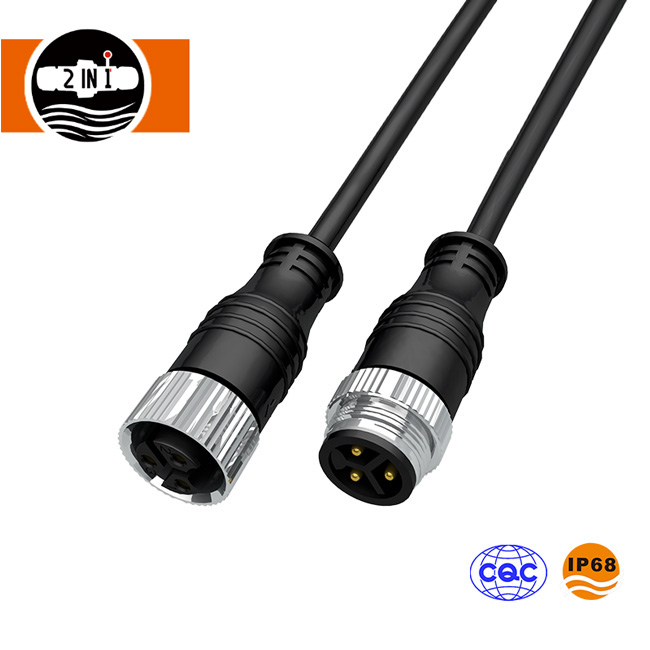
For engineers and maintenance technicians working in demanding environments, the question of tooling requirements often determines project timelines, labor costs, and long-term reliability. Watertight Circular Wire Connectors are engineered to withstand moisture, dust, vibration, and thermal cycling—but their robust sealing mechanisms and precision contact geometries do raise a legitimate concern: can these connectors be assembled reliably with standard shop tools, or do they demand dedicated equipment? At HuaYi-FaDa, we have spent over a decade manufacturing high-performance Watertight Circular Wire Connectors for marine, industrial, and outdoor lighting sectors, and the short answer is: it depends on the connector family, the termination method, and the required ingress protection (IP) rating. This blog breaks down the tooling landscape so you can make informed, cost-effective decisions for your next field installation.
Termination Methods vs. Tool Requirements
Not all Watertight Circular Wire Connectors are created equal. The tooling needed hinges primarily on how the wire attaches to the contact pins or sockets. Below is a clear comparison of the three most common termination styles used in field assemblies.
| Termination Type | Special Tools Required? | Typical Tooling Cost (USD) | Field-Friendliness |
|---|---|---|---|
| Solder Cup | No—standard soldering iron + heat shrink | $20–$100 | Moderate (skill-dependent) |
| Crimp (open barrel) | Yes—ratcheting crimp tool with positioner | $150–$600 | High (consistent results) |
| Screw/Spring clamp | No—standard screwdriver or hex key | $5–$30 | Very High (quick, no training) |
Why Crimp Tools Are Non-Negotiable for High-Reliability Seals
For crimp-style Watertight Circular Wire Connectors, a generic plier-type crimper will almost certainly compromise the gas-tight junction between wire and contact. This leads to increased contact resistance, heat generation, and eventual seal failure because the rubber grommet or O‑ring depends on the contact being fully seated within the insulator. HuaYi-FaDa recommends using the manufacturer’s specified die set or an interchangeable crimp tool (e.g., M22520/2-01 class) for the following reasons:
-
Controlled indent depth—prevents over-crimping that cracks the contact barrel.
-
Precise strip length—ensures the conductor reaches the inspection hole without excess bare wire piercing the rear seal.
-
Pull-force validation—a proper crimp meets MIL‑T‑22520 tensile specs, which directly preserves the connector’s IP67 or IP68 rating.
In field scenarios where power is unavailable or space is constrained, HuaYi-FaDa offers pre-crimped lead assemblies with molded backshells, reducing on-site tooling to just a torque wrench for the coupling ring.
Screw-Clamp Connectors: The “Tool‑Lite” Alternative
If your project involves frequent reconfiguration or untrained personnel, screw‑clamp Watertight Circular Wire Connectors are a pragmatic choice. These terminals accept solid or stranded wires (24‑12 AWG) and are tightened with a standard 2.5mm flathead or Phillips screwdriver. While no special crimper is required, we strongly advise using a torque‑limited screwdriver (set to 0.5–0.8 N·m) to avoid crushing the conductor or stripping the plastic insulator. HuaYi-FaDa integrates a visual torque indicator on our screw‑clamp series, giving field crews immediate feedback without additional gauges.
The Hidden Tool: Seal Compression Fixtures
Beyond contact termination, the physical mating of the two connector halves often requires a spanner wrench or hook‑spanner to achieve the recommended coupling torque (typically 2–5 N·m for M12 threads). Under‑torquing leaves a gap that allows capillary water ingress; over‑torquing can deform the O‑ring. HuaYi-FaDa supplies a lightweight, color‑coded torque spanner with every bulk order, eliminating guesswork. For bayonet‑style connectors, no tool is needed—just a firm push‑and‑twist motion—but we always recommend a contamination‑proof cap during assembly to keep threads clean.
Watertight Circular Wire Connectors FAQ
Q1: Can I use a standard automotive crimp tool for Watertight Circular Wire Connectors rated IP68?
A1: Technically, you can physically crimp with an automotive tool, but the result will almost never pass the IP68 submersion test (1.5m for 24 hours). Automotive crimpers lack the precision anvil and indent geometry required for the contact’s closed‑barrel design. The seal relies on the contact being uniformly deformed around the conductor strands; any asymmetry creates micro‑gaps that act as wicking paths for water. HuaYi-FaDa provides a die‑specific crimp chart for each model—using any other tool voids the warranty. For field emergencies, we recommend carrying a pre‑terminated extension cable rather than improvising a crimp.
Q2: Are there any Watertight Circular Wire Connectors that require zero tools for both termination and mating?
A2: Yes. HuaYi-FaDa offers a push‑in spring‑clamp series (model HY‑SC12) where the wire is inserted and locked by a lever‑action button—no screwdriver or crimper needed. Mating is achieved via a hand‑tightened knurled ring with an audible click, requiring no spanner. These connectors are rated IP67 and are ideal for temporary installations, testing rigs, and solar field combiner boxes. However, zero‑tool designs have a lower current capacity (max 10A vs. 20A for crimp versions) and should not be used in high‑vibration environments unless supplemented with a cable strain‑relief clamp.
Q3: How do I know if my field‑assembled Watertight Circular Wire Connectors have been torqued correctly without buying an expensive digital torque sensor?
A3: A practical field method is the “paint‑mark” technique. After tightening the coupling ring to the specified rotation angle (e.g., 270° from the index mark), apply a thin line of permanent marker across the seam between the plug and receptacle. If the line remains unbroken after 10 minutes of operation, the connector has not backed off. For more quantitative assurance, HuaYi-FaDa includes a free plastic go/no‑go gauge with each tool set—this gauge slips over the assembled connector and indicates if the gap exceeds 0.2mm. Additionally, many of our crimp tools feature an integral ratchet that only releases when the full crimp cycle is completed, eliminating under‑crimping even for novice users.
Summary: Match the Tool to the Task
| User Profile | Recommended Connector Type | Essential Field Tool |
|---|---|---|
| Offshore rig electrician | Crimp‑style (MIL‑spec) | Ratcheting crimper + torque spanner |
| Building automation installer | Screw‑clamp | Torque‑limited screwdriver |
| Temporary event lighting crew | Push‑in spring clamp | None (hand‑tighten only) |
| R&D lab test engineer | Solder‑cup | Temperature‑controlled soldering station |
Make Your Next Installation Fail‑Proof
Choosing the right assembly method for Watertight Circular Wire Connectors is not about avoiding tools—it is about using the correct tool for the specific termination and seal design. HuaYi-FaDa manufactures every connector with clear laser‑etched tooling codes on the shell, so you can instantly reference the recommended die part number or screw torque value. We also provide free, downloadable field‑assembly checklists and video guides for all our product families.
Ready to equip your team with reliable, field‑friendly Watertight Circular Wire Connectors? Contact HuaYi-FaDa today for a customized tooling kit that matches your cable gauge, IP requirement, and budget. Our technical support engineers will review your application drawings and recommend the optimal termination strategy—with no obligation.