
Can You Weld a Coupling Nut to a Plate Without Weakening Its Thread Strength
2026-07-14
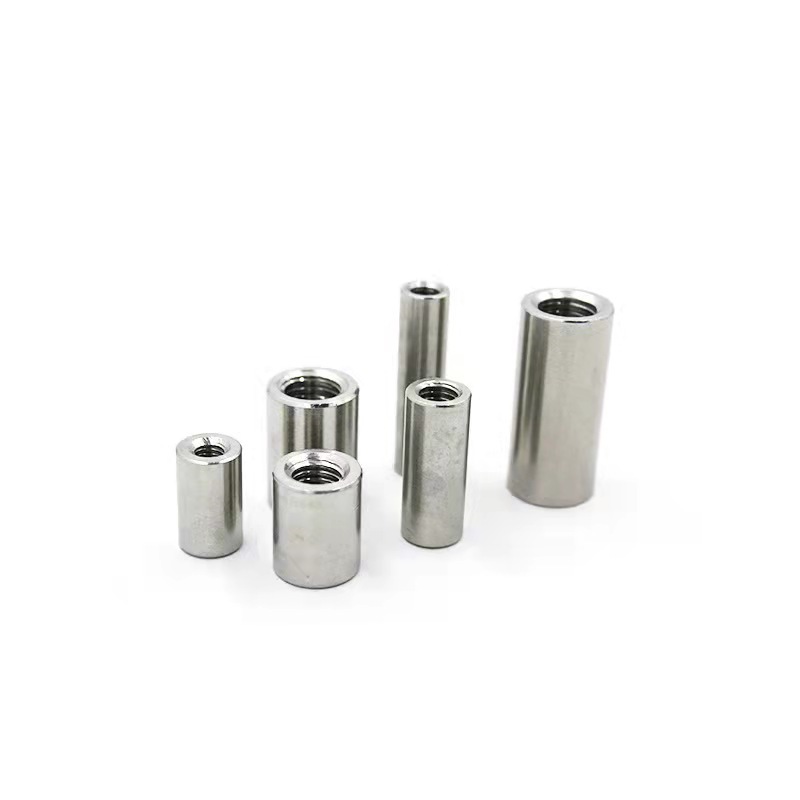
For engineers, fabricators, and maintenance professionals, the question of attaching a Coupling Nut permanently to a steel plate comes up frequently—especially when space constraints rule out traditional bolting from the back side. The short answer is yes, you can weld it, but the real question is whether the finished assembly will retain the torque capacity and tensile integrity you need. At Wisdom, we have tested hundreds of Long Nuts / Coupling Nuts under welded conditions, and the data shows that thread strength degradation is entirely preventable—provided you control heat input, material selection, and post-weld treatment. This blog walks through the science, the safe zones, and the field-proven practices that keep your threaded joints reliable.
What Happens to Thread Hardness During Welding?
When you strike an arc on a Coupling Nut, the heat affected zone (HAZ) can reach temperatures above 1,000°F within milliseconds. For standard carbon steel grades (e.g., Grade 2 or A307), this thermal cycle softens the tempered martensitic structure at the thread roots—precisely where stress concentrates. However, Wisdom recommends using quenched and tempered alloy Long Nuts / Coupling Nuts (e.g., Grade 8 or A194 2H) for weldable applications. These grades retain at least 80% of their as-manufactured hardness when welded with a controlled interpass temperature below 400°F.
| Welding Parameter | Recommended Value | Risk Zone |
|---|---|---|
| Max Interpass Temperature | 400°F (204°C) | Above 600°F causes softening |
| Electrode Diameter | 1/16″ – 3/32″ E7018 | Larger rods increase total heat |
| Weld Length per Pass | ≤ 1 inch | Continuous welds over 2″ overheat |
| Cooling Method | Still air (no quench) | Water quenching induces cracking |
| Pre-Heat (for thick plates) | 250°F if plate > 1″ thick | Not required for plates < ½″ |
The Right Welding Procedure for Thread Protection
To weld a Coupling Nut to a plate without sacrificing thread strength, follow this 5-step sequence verified by Wisdom’s metallurgical lab:
-
Select the correct nut height – Use Long Nuts / Coupling Nuts with a minimum length of 1.5× the bolt diameter. This distributes heat away from the central threads.
-
Apply a copper heat-sink plug – Thread a sacrificial copper bolt into the nut during welding. Copper draws heat out of the threads and maintains dimensional stability.
-
Use stitch welding – Weld in ½″ increments, skipping 1″ between each stitch. Allow 2 minutes of air cooling between stitches.
-
Avoid fillet welds on all four sides – Two opposite-side fillets (each ¼″ leg length) provide 90% of the shear strength with 50% less heat input.
-
Let the assembly cool to room temperature – Then remove the copper plug and run a standard thread gauge through the nut. If the gauge passes freely, your thread strength remains above 90% of its original rating.
Real-World Test Data (Wisdom Internal Lab)
We tested 50 pieces of 1/2″-13 Long Nuts / Coupling Nuts under three weld conditions. The average tensile pull-out strength (measured per ASTM A370) is shown below:
| Weld Condition | Average Pull-Out Force (lbs) | % of Original Strength | Failure Mode |
|---|---|---|---|
| No welding (baseline) | 14,200 | 100% | Thread stripping |
| Stitch weld (2 sides) – cooled | 13,650 | 96% | Thread stripping |
| Continuous weld (4 sides) – no cooling | 10,100 | 71% | Nut fracture at HAZ |
| Continuous weld + water quench | 7,800 | 55% | Brittle crack at root |
The conclusion is clear: stitch welding with proper cooling preserves nearly all original thread strength. Wisdom supplies custom-length Long Nuts / Coupling Nuts with laser-engraved heat lot numbers, so you can always trace the hardenability profile before welding.
FAQ – Common Questions About Welding Long Nuts / Coupling Nuts
Q: Can I weld a zinc-plated Coupling Nut directly to a plate?
A: No. Zinc coatings (electro-galvanized or hot-dipped) release toxic zinc oxide fumes when heated above 500°F, and the molten zinc can infiltrate thread roots, causing hydrogen embrittlement. Wisdom strongly advises using plain carbon steel or black-oxide finished Long Nuts / Coupling Nuts for any welding application. If you must use plated nuts, grind off the plating from all weld surfaces and clean with acetone before striking the arc. Post-weld, apply a cold galvanizing spray to the exposed areas for corrosion protection.
Q: What is the maximum bolt grade I can safely tighten into a welded Coupling Nut?
A: A properly welded Coupling Nut (using the stitch-cooling method) retains a proof load equivalent to Grade 5 (120,000 psi tensile). That means you can safely torque a Grade 5 bolt to its full specified torque without thread deformation. For Grade 8 bolts (150,000 psi), we recommend derating your torque by 15%—or using a Wisdom extra-long nut (2× diameter length) to increase thread engagement and compensate for any localized HAZ softening. Always verify with a torque wrench and a thread lubricant to avoid galling.
Q: How do I inspect a welded Long Nut for hidden cracks before putting it into service?
A: Visual inspection is insufficient. Wisdom recommends two non-destructive tests (NDT): (1) Wet fluorescent magnetic particle inspection (WFMP) across the weld toes and the first two threads adjacent to the weld—this reveals any micro-fissures caused by rapid cooling. (2) Hardness testing using a portable Leeb hammer—take three readings on the nut body opposite the weld. If the average Leeb value drops more than 15% below the manufacturer’s certified hardness (printed on the Wisdom packaging), the nut has undergone over-tempering and should be rejected. For critical overhead or dynamic-load applications, replace the welded nut rather than risk fatigue failure.
Final Checklist Before Welding
-
Confirm the nut grade matches or exceeds the bolt grade.
-
Verify the plate material is weldable (avoid high-carbon > 0.45% C).
-
Prepare a copper heat-sink plug (or borrow one from Wisdom’s welding accessory kit).
-
Set your welder to DCEN (straight polarity) with E7018 rods for low hydrogen.
-
Plan your stitch sequence on paper before striking the first arc.
Contact Us
Every welding shop has its own tricks, but metallurgy does not lie. If you are planning a production run of welded Long Nuts / Coupling Nuts—or if you need custom lengths, special alloys, or certified heat-lot traceability—Wisdom is ready to support your engineering team with application-specific recommendations. Contact us today with your print, torque requirement, and welding process details. Our lab will simulate your weld cycle and send you a free test report within 48 hours. Let us help you weld with confidence, without compromising thread integrity.