
Can Chemical Anchors Be Used in Wet or Underwater Conditions
2025-12-30
When planning construction projects in challenging environments, a common and critical question arises: Can Chemical Anchors be used in wet or underwater conditions? The integrity of structural connections often depends on the answer. As a leader in providing reliable fastening solutions, Siyi understands that this topic is vital for engineers and contractors working on infrastructure, marine facilities, or projects exposed to the elements. The short answer is yes, but with crucial specifications. Not all chemical anchoring systems are created equal, and success hinges on using the correct product and following a stringent installation protocol.
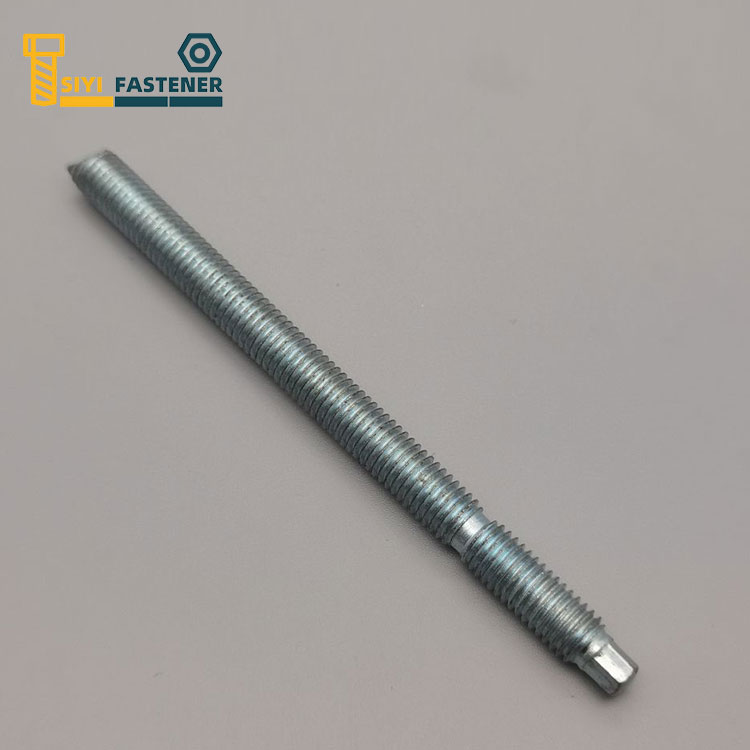
Specialized Chemical Anchor products, known as water-tolerant or underwater adhesives, are formulated to cure effectively in the presence of moisture. These are essential for applications such as:
-
Marine structures: Piers, docks, and offshore platforms.
-
Water treatment facilities: Tanks and processing units.
-
Foundations and basements: Areas with high humidity or water ingress.
-
Infrastructure projects: Bridges and dams exposed to weather.
The key to performance lies in the resin chemistry. These formulas often feature hydrophobic (water-repelling) properties, displacing water from the borehole to achieve a proper bond with the substrate.
Critical Factors for Success
| Factor | Importance & Consideration |
|---|---|
| Product Certification | The Chemical Anchor must be explicitly certified for wet or underwater use. Always check technical data sheets and approval listings (e.g., ETA, ICC-ES). |
| Surface Preparation | The hole must be thoroughly cleaned. Even with water-tolerant resins, loose debris and standing water in the hole can compromise bond strength. |
| Installation Technique | Using injection systems that can dispense resin against water pressure is often necessary. The hole is typically drilled deeper to create a resin reservoir. |
| Curing Time | Curing times are significantly extended in cold, wet conditions. Load application must wait until full cure is achieved as per manufacturer guidelines. |
Chemical Anchor FAQ
What is the main difference between standard and water-tolerant chemical anchors?
Standard polyester or vinyl ester anchors can fail in wet holes as water inhibits proper curing of the resin. Water-tolerant anchors, often based on modified epoxy or pure epoxy systems, are designed to react and cure even when in contact with water, ensuring a reliable bond.
How do you install a chemical anchor in a water-filled hole?
The recommended method is the "underwater injection" technique. After drilling and cleaning, a specialized injection nozzle is inserted to the bottom of the hole. The Siyi underwater adhesive cartridge is then injected, progressively filling the hole from the bottom upward, which displaces the water without trapping it.
Can I use a water-tolerant chemical anchor for all my projects?
While versatile, they are typically more expensive than standard anchors. For dry, interior applications, a standard Chemical Anchor is more cost-effective. Always choose the product based on the specific site conditions and engineering requirements to ensure both safety and economic efficiency.
For projects where failure is not an option, selecting the right anchoring solution is paramount. The advanced formulations of Siyi underwater Chemical Anchors provide the confidence needed for permanent installations in the most demanding wet and submerged environments. Our team is ready to support your specific project challenges with expert technical advice and certified products.
Contact us today to discuss your project requirements and request a specification guide for our full range of water-tolerant fastening systems.