
Can a Stainless Steel Threaded Flange Be Used with Galvanized Pipe Without Galvanic Corrosion Risk
2026-07-15
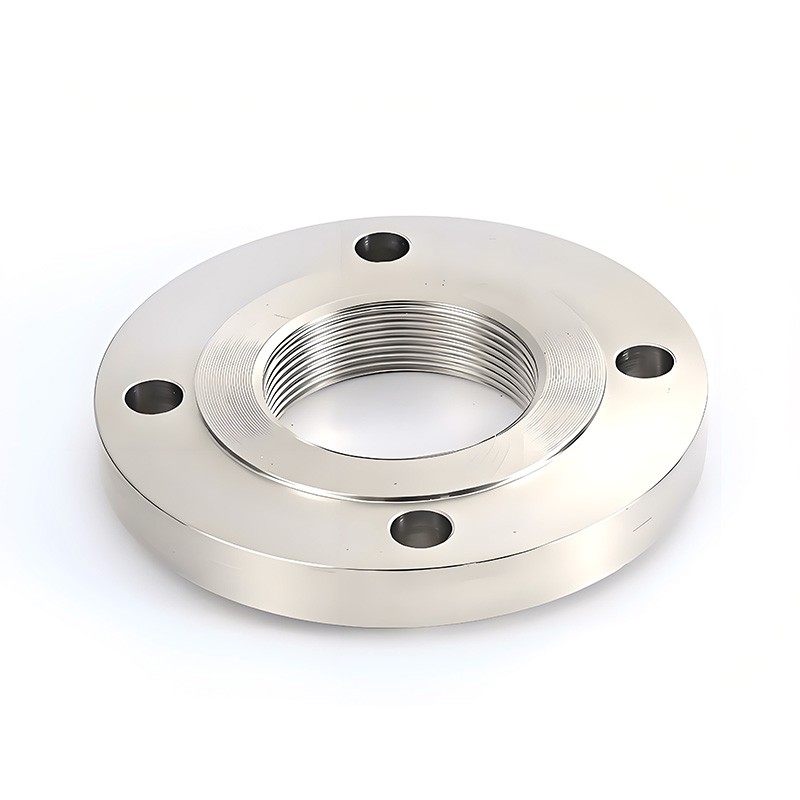
When engineers specify pipe joining methods for mixed-metal systems, the question of galvanic compatibility always rises to the top of the risk matrix. Pairing a Stainless Steel Threaded Flange with galvanized steel pipe appears cost-effective on paper, but the electrochemical reality demands closer scrutiny. At HengDi, we field this query weekly from project managers who want the corrosion resistance of stainless without abandoning existing galvanized runs. The short answer is yes—but only under strict conditions, and never without a clear understanding of the galvanic series, electrolyte exposure, and isolation strategies.
Understanding the Galvanic Potential Difference
Galvanic corrosion occurs when two dissimilar metals contact each other in the presence of an electrolyte (water, humidity, or process fluid). The less noble metal becomes the anode and corrodes preferentially. In the case of a Stainless Steel Threaded Flange (typically 304 or 316) connected to galvanized steel (zinc-coated carbon steel), the potential difference is approximately 0.5 to 0.7 volts in seawater—enough to drive rapid zinc depletion if no mitigation exists.
| Metal Pair | Galvanic Potential (vs. Ag/AgCl) | Anode (Corrodes) | Risk Level |
|---|---|---|---|
| 316 Stainless Steel | +0.25 V | Cathode (protected) | Low risk if isolated |
| Galvanized Steel (zinc) | -0.45 V | Anode (sacrificial) | High risk in wet service |
| 304 Stainless Steel | +0.20 V | Cathode | Moderate risk without coating |
| Carbon Steel (bare) | -0.35 V | Anode | Very high risk |
The table above shows that the Stainless Steel Threaded Flange always acts as the cathode, meaning the galvanized pipe will sacrificially corrode at the threaded junction—often within months in outdoor or humid environments.
Four Critical Conditions for Safe Use
HengDi recommends that a Stainless Steel Threaded Flange can be used with galvanized pipe only if all four conditions are met simultaneously:
-
Dry, indoor, or climate-controlled environment – relative humidity consistently below 60%.
-
No stagnant fluid – the system drains completely between cycles.
-
Dielectric isolation – a non-metallic bushing or gasket separates the two metals.
-
Cathodic protection – sacrificial anodes are installed downstream.
When these conditions fail, the zinc coating on the pipe threads will deplete within 6–18 months, leading to loose connections, seepage, and eventual thread stripping. HengDi engineers have documented field failures where a 2-inch Stainless Steel Threaded Flange lost joint integrity in just 90 days of offshore cooling-water service.
Best Practice: Isolation and Coating Strategies
The most reliable method is to install a dielectric union between the Stainless Steel Threaded Flange and the galvanized nipple. This union features a nylon or polyamide insulating sleeve that breaks the electrical circuit. Additionally, HengDi recommends:
-
Applying anti-seize compound with zinc-free formulation on male NPT threads.
-
Using a full-face non-conductive gasket (PTFE or rubber) at the flange face.
-
Coating the galvanized pipe threads with two-part epoxy after tightening.
| Mitigation Measure | Effectiveness | Cost Impact | Recommended By |
|---|---|---|---|
| Dielectric union | 95% risk reduction | Moderate | HengDi (standard) |
| PTFE tape + epoxy coating | 70% risk reduction | Low | Field practice |
| Cathodic protection (zinc anode) | 85% risk reduction | High | Marine projects |
| Regular inspection (6-month) | 50% risk reduction | Low | Maintenance plan |
Frequently Asked Questions About Stainless Steel Threaded Flange Compatibility
Q1: Can a Stainless Steel Threaded Flange directly thread onto a galvanized pipe without any adapter?
A: Technically yes, the NPT threads are mechanically compatible (both are 60° taper). However, direct threading without a dielectric barrier creates a galvanic couple. Even with PTFE tape, the tape only seals—it does not electrically isolate because the metal-to-metal contact occurs at the thread roots and crests. HengDi advises that direct threading is acceptable only for temporary connections (less than 30 days) or in fully dry gas systems. For permanent installations, always install a dielectric nipple or insulating gasket between the Stainless Steel Threaded Flange and the galvanized pipe.
Q2: What happens to the galvanized pipe threads if the Stainless Steel Threaded Flange is exposed to rain or wash-down water?
A: Rainwater acts as an excellent electrolyte. Within 2–4 weeks, white rust (zinc hydroxide) appears on the galvanized threads adjacent to the flange. Over 3–6 months, the zinc layer completely dissolves, exposing bare carbon steel, which then corrodes rapidly, forming red rust. The Stainless Steel Threaded Flange remains visually perfect, but the joint loosens, and leakage begins at the thread interface. HengDi has tested this under ASTM G82 accelerated conditions—the failure time drops to 200 hours in salt-fog chambers. The only safe solution for outdoor service is to replace the galvanized spool with a full stainless steel assembly.
Q3: Does using a 316L Stainless Steel Threaded Flange instead of 304 reduce galvanic risk with galvanized pipe?
A: No—in fact, 316L has a slightly higher nobility (more cathodic) than 304, which increases the driving voltage by about 0.05 volts. The galvanic corrosion rate of the zinc anode is directly proportional to the potential difference. Therefore, switching to 316L makes the problem marginally worse, not better. HengDi recommends using 304 if you must pair with galvanized pipe, and always combine it with a coated thread and dielectric separator. Never assume that "higher grade" equates to better compatibility—it does the opposite in galvanic pairs.
Real-World Application Guidelines from HengDi
For process engineers, the decision flowchart is simple:
-
Water / steam / condensate → Do not use. Specify all-stainless or carbon-steel flanges.
-
Instrument air / dry nitrogen → Permissible with dielectric union and thread sealant.
-
Temporary test headers → Acceptable for hydrotesting (drained immediately after).
-
Food / beverage CIP lines → Not permitted due to crevice corrosion and sanitary requirements.
HengDi manufactures Stainless Steel Threaded Flanges in Class 150, 300, and 600 with optional PTFE lining for added isolation. Every flange is marked with material grade, schedule, and heat number for full traceability.
Final Verdict
A Stainless Steel Threaded Flange can be used with galvanized pipe, but the galvanic corrosion risk is real and often underestimated. Without dielectric isolation, dry service, and regular monitoring, the joint will fail prematurely—sometimes catastrophically. HengDi always advises customers to evaluate the total cost of ownership: a failed flange connection costs far more than the premium for compatible metallurgy.
Need a site-specific compatibility assessment for your piping system? Our engineering team at HengDi provides free galvanic corrosion risk reports with every flange quotation. We stock over 2,000 Stainless Steel Threaded Flange units in 304, 304L, 316, and 316L, with custom boring and threading options available in 48 hours. Contact us today with your pipe schedule, fluid type, and ambient conditions—we will deliver a written recommendation and a competitive quote within one business day. Your project integrity starts with the right connection.