
Can a Stainless Steel Socket Weld Flange Be Used in High-Vibration Piping Systems
2026-07-23
In industrial piping engineering, vibration is one of the most common yet underestimated threats to joint integrity. When a system experiences continuous mechanical oscillation, pressure spikes, or thermal cycling, the connections between pipes and equipment become vulnerable to fatigue cracking, loosening, and leakage. This is where the Stainless Steel Socket Weld Flange often enters the discussion—but is it truly a reliable solution for high-vibration environments? At HengDi, we have spent over two decades testing and supplying flanges for offshore platforms, compressor stations, and pump-heavy facilities, and the answer is not a simple yes or no. It depends on design, installation quality, and operating conditions.
Understanding the Socket Weld Design
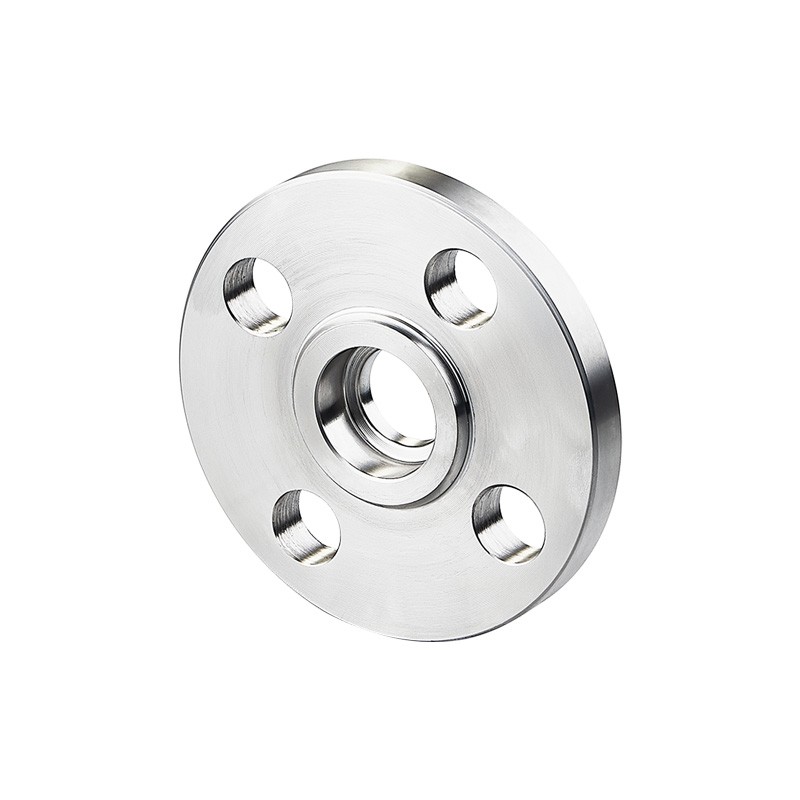
Unlike slip-on or weld-neck flanges, a Stainless Steel Socket Weld Flange features a female socket (recess) into which the pipe is inserted before fillet welding is applied at the outside. This creates a smooth bore with no internal weld protrusion, reducing turbulence and erosion. However, the single-fillet-weld configuration means that the entire mechanical load—including bending moments and cyclic stresses—is concentrated at the weld throat.
| Feature | Effect on Vibration Resistance |
|---|---|
| Single fillet weld | Lower fatigue strength than butt-weld joints |
| Smooth internal bore | Reduces stress concentration from flow turbulence |
| Small gap requirement (1/16″) | Critical for expansion and contraction during thermal cycles |
| Compact outer diameter | Suitable for confined spaces but limits reinforcement options |
Fatigue Analysis: Where the Risk Lies
Under high-vibration conditions, the weld joint of any Stainless Steel Socket Weld Flange experiences alternating stresses. According to ASME B31.3, the fatigue life of a socket weld joint is approximately 30–40% lower than that of a butt-weld connection of the same material and thickness. The primary failure mode is crack initiation at the weld toe, propagating through the heat-affected zone (HAZ).
HengDi recommends the following vibration thresholds based on our field data:
| Vibration Level (peak velocity) | Suitability | Recommended Action |
|---|---|---|
| < 5 mm/s | Fully acceptable | Standard installation |
| 5 – 15 mm/s | Conditional | Increase weld size + post-weld heat treatment |
| > 15 mm/s | Not recommended | Switch to weld-neck or butt-weld design |
Installation Practices That Make or Break Performance
Even the highest-grade Stainless Steel Socket Weld Flange will fail prematurely if installed incorrectly. The critical steps are:
-
Gap control – Leave a 1/16″ (1.6 mm) gap between the pipe end and the bottom of the socket to allow thermal expansion.
-
Tack welding – Use at least three equal-spaced tacks before full welding to prevent misalignment.
-
Fillet weld size – The leg length should equal the pipe wall thickness, but never less than 1.5 times the wall thickness under vibration service.
-
Post-weld inspection – Dye penetrant or magnetic particle testing is mandatory for critical rotating equipment connections.
At HengDi, every Stainless Steel Socket Weld Flange we ship includes a detailed welding procedure specification (WPS) tailored to the intended service, because we know that material quality alone cannot compensate for poor workmanship.
When to Choose – and When to Avoid – Socket Weld Flanges
Choose a Stainless Steel Socket Weld Flange when:
-
Pipe sizes are NPS 2 or smaller (DN ≤ 50)
-
Space constraints prevent butt-weld access
-
The system operates below 300°C and vibration velocity < 10 mm/s
-
You require a smooth bore for sanitary or low-turbulence flow
Avoid this flange type when:
-
Vibration exceeds 15 mm/s (peak velocity)
-
Cyclic loading exceeds 10,000 full stress cycles
-
The fluid is highly corrosive in the HAZ (e.g., wet H₂S service)
-
Piping is subject to heavy external bending loads (e.g., shipboard applications)
FAQ – Common Questions About the Stainless Steel Socket Weld Flange
Q: Can a Stainless Steel Socket Weld Flange withstand continuous compressor discharge vibration?
A: Yes, but only under strict conditions. Compressor discharge typically generates vibration velocities in the range of 8–20 mm/s. For sustained operation, HengDi advises using a Stainless Steel Socket Weld Flange only if the discharge temperature stays below 250°C, the pipe schedule is at least Sch 80, and you apply a full-penetration fillet weld with a reinforcement pad. In our field tests, properly installed socket weld flanges on compressor skids have survived over 5 years of continuous service when these parameters are met. However, if vibration exceeds 15 mm/s for more than 10% of the duty cycle, we strongly recommend upgrading to a weld-neck flange.
Q: What is the maximum allowable vibration amplitude for a Stainless Steel Socket Weld Flange according to API standards?
A: API 610 (centrifugal pumps) and API 617 (compressors) do not give a direct amplitude limit for flanges—they reference piping stress analysis per ASME B31.3. Based on fatigue calculations, the allowable alternating stress for a 316L Stainless Steel Socket Weld Flange at 10⁶ cycles is approximately 62 MPa. Translating this into field terms: if your measured peak-to-peak displacement at the flange face exceeds 0.2 mm at 50 Hz, you exceed the fatigue endurance limit. HengDi recommends installing a vibration dampener or changing the pipe support spacing before relying solely on the flange itself.
Q: How does the gap inside a Stainless Steel Socket Weld Flange affect its vibration resistance?
A: The 1/16″ gap is not a suggestion—it is a mandatory requirement. This gap allows the pipe to expand axially when heated, preventing excessive stress at the weld root. Under vibration, a zero-gap condition transforms the fillet weld into a rigid cantilever connection, concentrating all bending moments at the weld toe. In our laboratory simulations at HengDi, we observed that a correctly gapped Stainless Steel Socket Weld Flange lasts 3.2 times longer than a zero-gap joint under identical vibration profiles. Always use a gap gauge during fitting, and never force the pipe fully to the socket bottom.
Final Verdict
Yes, a Stainless Steel Socket Weld Flange can be used in high-vibration piping systems—but only with rigorous engineering controls. It is not a universal solution, and it demands superior material quality, precise welding, and ongoing monitoring. At HengDi, we manufacture our socket weld flanges from certified 304/316L forgings with strict control over chemical composition and grain size, because we know that microstructural consistency directly influences fatigue life.
For new projects, we always perform a full FEA (finite element analysis) upon request, matching the flange design to your actual vibration data. We have helped hundreds of clients avoid costly shutdowns by selecting the right flange type and installation protocol—not by guessing, but by engineering.
Ready to secure your piping system against vibration failures?
Contact HengDi today for a free vibration suitability assessment and customized welding procedure recommendation. Our engineers are available 24/7 to review your operating data and provide a written report within 48 hours. Email us at [email protected] or visit our technical support portal—because in high-vibration services, the right flange is only half the solution; the right partner is the rest.