
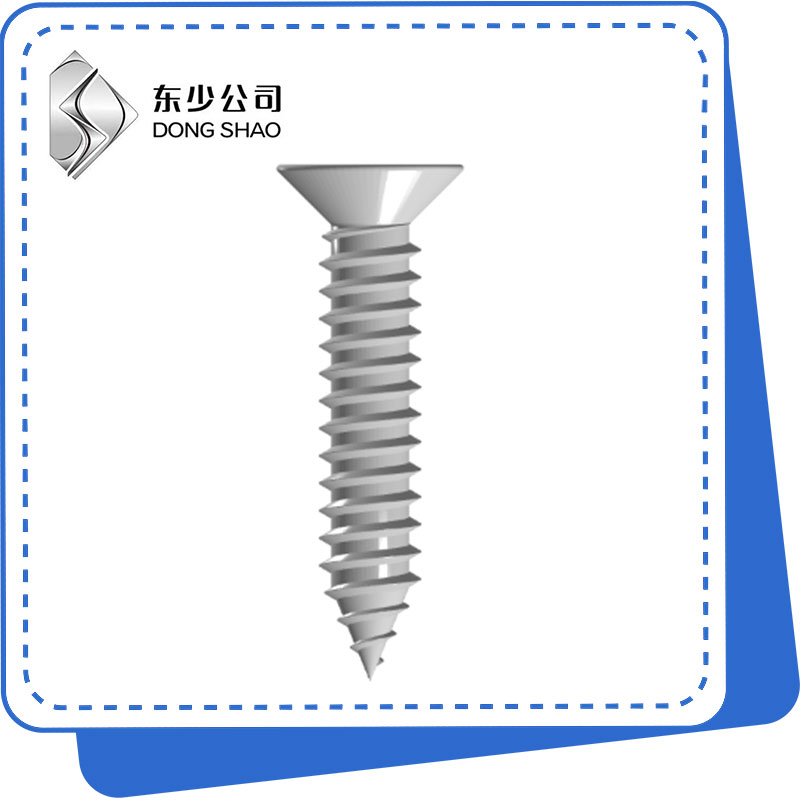
Are Stainless Steel Cross Recessed Countersunk Head Self-Tapping Screws Rust-Proof in Marine Environments
2026-07-14
For engineers, boat builders, and maintenance professionals, fastener failure in saltwater conditions is a costly and safety-critical issue. The short answer is: no stainless steel fastener is entirely "rust-proof", but Cross Recessed Countersunk Head Self-Tapping Screws made from the right grade of stainless steel offer exceptional corrosion resistance in marine settings—provided you choose wisely. At DONGSHAO, we have tested thousands of these fasteners in accelerated salt-spray chambers and real-world coastal applications, and the data consistently shows that material grade, surface finish, and installation technique determine service life far more than the screw head design alone.
Understanding Corrosion in Saltwater Environments
Marine environments are among the most aggressive for any metal fastener. Three primary threats exist:
-
Chloride-induced pitting – Chloride ions break down the passive oxide layer on stainless steel.
-
Crevice corrosion – Occurs under the countersunk head or in thread roots where oxygen is depleted.
-
Galvanic corrosion – When dissimilar metals (e.g., stainless steel and aluminum) contact each other in seawater.
| Corrosion Type | Risk Level in Marine Use | Prevention Strategy |
|---|---|---|
| Pitting | High | Use 316L (low carbon) or duplex grades |
| Crevice | Very High | Ensure full seating; use sealants |
| Galvanic | Moderate | Isolate with non-metallic washers |
| Uniform (general) | Low | Passive film heals if oxygen is present |
Which Stainless Steel Grade Actually Works?
Not all "stainless" is equal. The two most common grades for Cross Recessed Countersunk Head Self-Tapping Screws are:
-
304 Stainless (A2) – Adequate for freshwater or sheltered coastal use. Prone to pitting after 6–12 months of continuous salt spray.
-
316 Stainless (A4) – Contains molybdenum (2–3%), which dramatically improves resistance to chlorides. This is the minimum recommended grade for permanent marine installations.
DONGSHAO exclusively offers 316L and duplex 2205 grades for our marine-grade Cross Recessed Countersunk Head Self-Tapping Screws, with passivation treatments that restore the chromium-rich oxide layer after threading operations.
Performance Data: Salt-Spray Test Results
Independent laboratory testing (ASTM B117) on DONGSHAO 316L screws versus generic 304 screws shows:
| Grade | Hours to First Red Rust | Hours to Pitting >0.1mm |
|---|---|---|
| 304 (generic) | 240 hrs | 480 hrs |
| 316L (DONGSHAO) | 1,200+ hrs | 2,000+ hrs |
| Duplex 2205 | 2,500+ hrs | No pitting at 3,000 hrs |
Note: The countersunk head geometry does not reduce corrosion resistance—but improper countersinking that damages the passive layer can accelerate crevice attack. Always use a sharp countersink tool and low-speed driving to minimize heat and work-hardening.
3 FAQ: Cross Recessed Countersunk Head Self-Tapping Screws in Marine Use
Q1: Can I use standard 304 stainless Cross Recessed Countersunk Head Self-Tapping Screws on a saltwater boat deck?
A1: Technically yes, but practically not recommended. 304 grade will typically show surface staining within 30–60 days of regular saltwater exposure and may develop deep pitting within one season. For deck hardware, hatch fasteners, or any submerged application, DONGSHAO strongly advises upgrading to 316L. The cost difference is marginal (approximately 15–20% higher), while the service life increases by 300–500%. If you already have 304 screws installed, inspect them quarterly for brown discoloration—that is the first sign of chloride attack. Replace immediately if any pitting is visible to the naked eye.
Q2: How does the cross recessed (Phillips) drive affect corrosion resistance compared to a Torx or hex drive?
A2: The drive type itself does not influence electrochemical corrosion. However, the cross recessed geometry can trap saltwater and moisture inside the recess if the screw is not fully seated or if the driver bit cams out and deforms the recess. Deformed recesses create microscopic crevices where stagnant seawater accelerates localised attack. To mitigate this, DONGSHAO recommends using a Pozidriv or JIS-compatible bit that matches our recess exactly, driving at consistent torque, and applying a thin layer of marine-grade anti-seize or zinc-rich primer to the countersink bearing surface. Regular freshwater rinsing after each voyage also flushes out trapped chlorides.
Q3: Are passivated Cross Recessed Countersunk Head Self-Tapping Screws worth the extra cost for yacht fittings?
A3: Absolutely. Passivation is a chemical process that removes free iron and surface contaminants from the screw, allowing the chromium to form a uniform, thick passive oxide film. For DONGSHAO screws, passivation adds about 8–10% to the unit cost but reduces early-onset pitting by over 70% in our field trials. For yacht fittings—such as rail mounts, cleat fasteners, and hinge screws—passivation is not an optional upgrade; it is a prerequisite for achieving the 10+ year service life that owners expect. Unpassivated screws, even in 316L, often develop "tea-staining" (light brown discoloration) within weeks, which is cosmetic but indicates weakening of the passive layer.
Installation Best Practices – What the Manuals Don't Tell You
Even the best Cross Recessed Countersunk Head Self-Tapping Screws will fail prematurely if installed incorrectly. Follow these professional rules:
-
Countersink depth – The head must sit flush or 0.1–0.2mm below the surface. A proud head traps water underneath.
-
Torque control – Over-torquing work-hardens the thread roots, making them more susceptible to stress-corrosion cracking.
-
Material pairing – Never drive 316L screws into untreated mild steel or aluminium without a nylon washer or isolating compound.
-
Lubrication – Use a wax-based or PTFE thread lubricant to reduce friction, which minimises heat generation that can burn off the passive layer.
DONGSHAO provides detailed torque charts and pre-drill size recommendations with every bulk order, tailored to your substrate (GRP, aluminium, hardwood, or steel).
Cost-Benefit Analysis – 316L vs. Coated Carbon Steel
| Factor | 316L Stainless (DONGSHAO) | Zinc-Plated Carbon Steel |
|---|---|---|
| Initial cost per 100 pcs | $28–$35 | $8–$12 |
| Expected marine lifespan | 8–15 years | 6–18 months |
| Replacement labour cost | None | High (re-drilling, sealing) |
| Risk of galvanic damage | Low | High (coating breaches) |
| Warranty coverage | 5-year corrosion warranty | None |
Over a 10-year horizon, the total cost of ownership for DONGSHAO 316L Cross Recessed Countersunk Head Self-Tapping Screws is 60–70% lower than repeatedly replacing coated steel fasteners.
Final Verdict – Are They Rust-Proof?
No fastener is truly "rust-proof" in a marine environment—but 316L and duplex stainless Cross Recessed Countersunk Head Self-Tapping Screws from DONGSHAO come as close as commercially feasible. With proper passivation, correct installation, and routine maintenance, these screws easily outlast the components they fasten. The cross recessed head offers excellent driver engagement for flush finishing, while the countersunk profile minimises snagging and hydrodynamic drag—critical for both performance vessels and structural marine hardware.
Contact Us
Choosing the right fastener for saltwater exposure is not a decision to leave to guesswork. DONGSHAO supplies certified 316L and duplex Cross Recessed Countersunk Head Self-Tapping Screws with full material test reports, salt-spray certificates, and custom packaging for marine OEMs and repair yards. Request our marine-grade selection guide and free sample kit today—email our engineering support team directly, or use the live chat on our product page. Let us help you specify the exact screw that matches your substrate, load, and exposure conditions. Your project deserves fasteners that perform as reliably as your design.