
Are Hex Washer Head Self Drilling Screws Suitable for Outdoor Treated Lumber Projects
2026-08-21
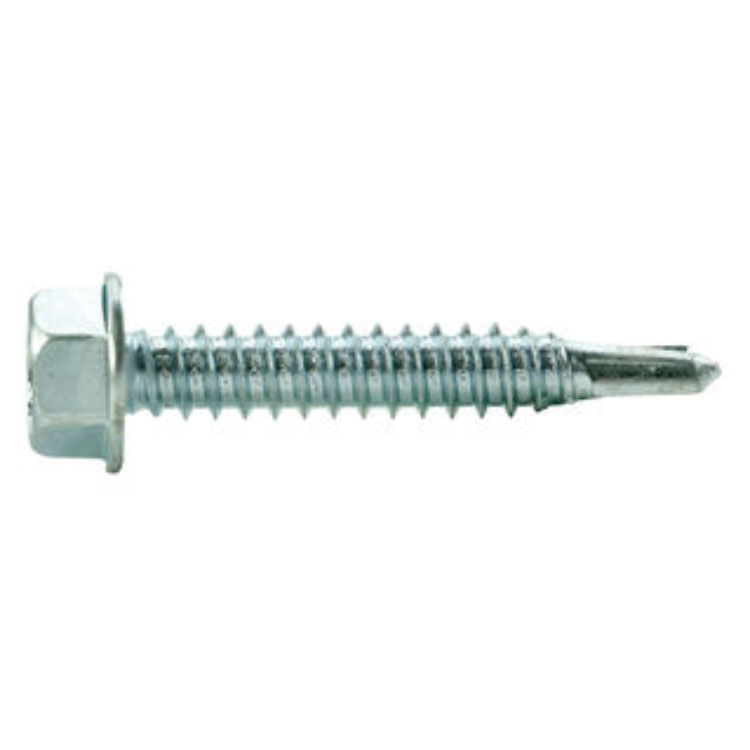
When building decks, pergolas, or fence structures with pressure-treated lumber, the choice of fastener often determines the lifespan of the entire project. While many contractors default to standard galvanized nails or standard wood screws, the Hex Washer Head Self Drilling Screw has emerged as a compelling alternative. However, the chemistry of modern treated lumber—which often contains alkaline copper quaternary (ACQ) or copper azole—poses serious corrosion risks to ordinary steel. This is where JOIN-fasteners engineered solutions come into focus, offering products specifically designed to withstand these harsh chemical environments while delivering superior holding power and installation speed.
The Chemical Challenge: Treated Lumber vs. Fastener Metals
Pressure-treated lumber is saturated with preservatives that leach moisture and reactive copper compounds. These chemicals accelerate galvanic corrosion in unprotected steel. A standard zinc-plated Hex Washer Head Self Drilling Screw can show red rust within 6–12 months of exterior exposure. For outdoor applications, the screw must have a minimum coating of hot-dip galvanized (G185) or stainless steel (304/316 grade) . JOIN-fasteners addresses this by offering a triple-layer anti-corrosion coating on their exterior-grade models, which passes 1,000+ hours of salt spray testing (ASTM B117).
Performance Comparison: Fastener Types for Outdoor Treated Wood
| Feature | Hex Washer Head Self Drilling Screw | Standard Wood Screw | Galvanized Lag Bolt |
|---|---|---|---|
| Pre-drilling required | No (self-drilling point) | Yes (pilot hole needed) | Yes (large pilot hole) |
| Corrosion resistance (coated) | High (with proper coating) | Moderate | High (if hot-dipped) |
| Pull-out strength (lbs/in) | 450–600 | 350–500 | 600–800 |
| Installation speed | Fast (one-step) | Slow (two-step) | Slow (two-step) |
| Cost per unit | Medium | Low | High |
| Suitable for ACQ lumber | Yes (with 304SS or ceramic coating) | No (unless stainless) | Yes (if hot-dipped) |
As the table illustrates, the Hex Washer Head Self Drilling Screw offers the best balance of speed and holding power, provided the coating matches the exposure level. For ground-contact applications, JOIN-fasteners recommends their 305 stainless steel variant, which eliminates galvanic corrosion entirely.
Installation Best Practices for Treated Lumber
Unlike dry interior wood, treated lumber is often wet and dimensionally unstable. The self-drilling point on a Hex Washer Head Self Drilling Screw clears wood fibers and shavings, reducing splitting—a common issue with standard screws. However, two critical rules apply:
-
Over-tightening – The integrated washer head is designed to compress against the wood surface without embedding. Use a torque-limiting clutch set to 40–50 in-lbs for softwoods and 60–70 in-lbs for hardwoods.
-
Countersinking – Unlike flat-head screws, the hex washer head sits proud of the surface. This is beneficial because it prevents moisture pooling around the fastener entry point, a frequent failure zone in decking.
JOIN-fasteners technical team has observed that installations with a 1/4" hex drive impact driver reduce cam-out by 90% compared to Phillips drives, making the Hex Washer Head Self Drilling Screw the preferred choice for production framing.
3 Frequently Asked Questions About Hex Washer Head Self Drilling Screws for Treated Lumber
Q1: Do I need to pre-drill pilot holes when using a Hex Washer Head Self Drilling Screw on treated lumber that is still wet from the treatment process?
A1: No, pre-drilling is generally unnecessary because the self-drilling tip is engineered to cut through both softwood and hardwood fibers without splitting. However, when working with treated lumber that has a moisture content above 30% (common for fresh ACQ-treated stock), the wood is more prone to "helicoptering" – where the screw pulls itself deeper than intended. To avoid this, increase your driving RPM to 2,500–3,000 and apply steady downward pressure. For extremely dense species like Southern Yellow Pine, JOIN-fasteners recommends using their "Sharp-Start" series, which features an extra-deep flute to eject wet shavings and prevent binding. Pre-drilling is only advised if the lumber is kiln-dried after treatment (KDAT) with a moisture content below 15%, but even then, it remains optional, not mandatory.
Q2: How long will a coated Hex Washer Head Self Drilling Screw last in direct sunlight and rain before corrosion begins?
A2: The service life depends entirely on the coating specification. A standard electroplated zinc coating (5–8 microns) will show surface rust within 6 to 8 months of continuous outdoor exposure on treated lumber. By contrast, a Hex Washer Head Self Drilling Screw with a ceramic-epoxy dual coating, such as those from JOIN-fasteners exterior line, achieves 1,000 to 1,500 hours of neutral salt spray resistance per ASTM B117. In real-world conditions, this translates to 10–15 years of maintenance-free performance in non-coastal environments. For coastal areas with airborne salt, only 304 or 316 stainless steel should be used – these grades offer a 50+ year lifespan because they contain no free iron to oxidize. Always check the fastener's coating thickness in microns; anything below 12 microns is unsuitable for ground-contact or horizontal decking surfaces.
Q3: Can I reuse a Hex Washer Head Self Drilling Screw that I removed from an old treated wood deck?
A3: Reusing these screws is strongly discouraged for structural applications. The self-drilling point loses its cutting edge after the first installation because the tungsten-carbide tip becomes dulled by the abrasive copper particles embedded in treated wood. Furthermore, the anti-corrosion coating is scratched and abraded during removal, exposing bare steel to moisture. Even if the screw appears visually intact, its pull-out strength diminishes by 40–50% upon reinstallation, according to fastener engineering tests. JOIN-fasteners advises always using fresh, factory-sealed screws for new projects. If you must reuse a screw for non-critical applications like temporary bracing, clean the threads with a wire brush and apply a cold galvanizing spray compound to restore some corrosion resistance – but never rely on reused fasteners for load-bearing deck joists or guardrail post connections.
Structural Considerations for Load-Bearing Connections
Treated lumber structures demand high shear and tensile capacity. A 1/4" x 3" Hex Washer Head Self Drilling Screw typically delivers a shear strength of 1,200–1,500 lbs, comparable to a 3/8" lag bolt. The integrated washer head distributes clamping force over a broader area, reducing wood crushing—a significant advantage over round-head screws. For ledger boards attaching to treated rim joists, JOIN-fasteners recommends spacing screws at 6" on center with a 2" edge distance. This pattern achieves code-compliant lateral load resistance per IRC 2021 guidelines.
Cost-Benefit Analysis: Is It Worth the Premium?
A quality coated Hex Washer Head Self Drilling Screw costs 20–30% more than a standard wood screw but saves 50% of installation labor by eliminating pilot holes. For a 500 sq.ft. deck with 2,000 fasteners, the time savings alone amount to 4–6 work hours. Additionally, the reduced callbacks for rust staining or loose boards make JOIN-fasteners the cost-effective choice over a 10-year ownership period.
Final Verdict
Yes, the Hex Washer Head Self Drilling Screw is not only suitable but often superior for outdoor treated lumber projects—provided you select the correct material grade and coating. Avoid cheap imports with vague "rust-resistant" claims. Instead, choose products with documented corrosion test reports. JOIN-fasteners offers a full range of certified exterior fasteners, from triple-coated carbon steel to 316 stainless, each backed by mill test certificates and third-party salt spray data.
Contact Us for Project-Specific Recommendations
Choosing the right fastener for your treated lumber project shouldn't be a guessing game. JOIN-fasteners engineering team is ready to review your lumber type, local climate, and load requirements to specify the exact Hex Washer Head Self Drilling Screw model for your needs. Request our free technical selection guide or speak with a fastener specialist. Visit our contact page to submit your project details, and we will respond with a detailed fastener schedule within 24 hours. Your structure’s durability starts with the right connection – let JOIN-fasteners help you build it once and build it right.