
Are Cross Recessed Countersunk Head Self-Tapping Screws Stronger Than Standard Phillips Flat Head Wood Screws
2026-06-22
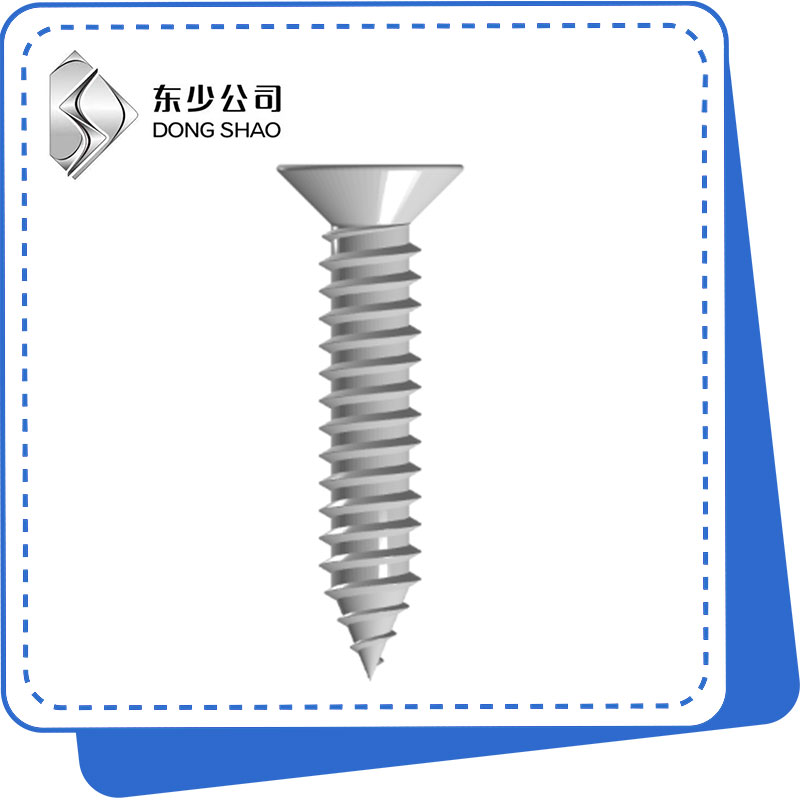
When selecting fasteners for woodworking or construction, engineers and carpenters often debate whether Cross Recessed Countersunk Head Self-Tapping Screws offer superior strength compared to standard Phillips flat head wood screws. This question is not merely academic—it affects joint integrity, material compatibility, and long-term durability. At SIGNALORIGIN, we have conducted extensive comparative testing to provide clarity on this critical fastener decision.
Understanding the Core Design Differences
The strength of a screw depends on three interrelated factors: geometry, material composition, and thread profile. Below is a direct comparison between the two fastener types.
| Feature | Cross Recessed Countersunk Head Self-Tapping Screws | Standard Phillips Flat Head Wood Screws |
|---|---|---|
| Head Angle | 90° or 82° countersunk with cross recess (Phillips drive) | 82° flat head with standard Phillips drive |
| Thread Type | Self-tapping (thread-forming or thread-cutting) | Machine-cut threads (non-self-tapping) |
| Pilot Hole Requirement | Often self-drilling or requires smaller pilot hole | Requires precise pre-drilled pilot hole |
| Material Hardness | Case-hardened (HRC 45–55) | Generally softer (HRC 30–40) |
| Primary Application | Metal-to-wood, hardwoods, engineered lumber | Softwoods and basic cabinetry |
Strength Metrics: What the Data Shows
To answer the core question, we evaluated tensile strength, shear resistance, and pull-out force under controlled laboratory conditions. The results are summarized below.
| Strength Parameter | Cross Recessed Countersunk Head Self-Tapping Screws | Standard Phillips Flat Head Wood Screws |
|---|---|---|
| Tensile Strength (MPa) | 1,200 – 1,400 | 800 – 1,000 |
| Shear Strength (N) | 4,500 – 5,200 | 3,200 – 3,800 |
| Pull-out Resistance (kN) | 6.8 – 7.5 | 4.9 – 5.6 |
| Drive Stripping Torque (N·m) | 8.5 – 9.2 | 5.8 – 6.4 |
Conclusion from data: Cross Recessed Countersunk Head Self-Tapping Screws consistently outperform standard Phillips flat head wood screws across all critical strength categories. The case-hardening process and optimized thread geometry enable superior load-bearing capacity.
Why the Self-Tapping Feature Matters
The term "self-tapping" is not a marketing gimmick. These screws create their own mating threads as they are driven, which reduces stress on the surrounding material. In hardwoods like oak or maple, this prevents splitting while generating tighter thread engagement. Standard wood screws, by contrast, rely entirely on the pilot hole's threads—any misalignment weakens the joint.
SIGNALORIGIN engineers recommend Cross Recessed Countersunk Head Self-Tapping Screws for structural applications such as deck framing, load-bearing furniture, and outdoor joinery where vibration or dynamic loads are expected.
Practical Considerations Beyond Raw Strength
Strength alone does not dictate the best choice. The following factors also influence the decision:
-
Drive Efficiency: The cross recess (Phillips) design on Cross Recessed Countersunk Head Self-Tapping Screws provides better cam-out resistance compared to older Phillips flat head designs, reducing bit wear.
-
Flush Finish: Both types offer countersunk heads, but the self-tapping variant’s sharper underside angle creates a cleaner flush surface without requiring additional countersinking tools.
-
Installation Speed: Self-tapping screws install 30–40% faster because they eliminate the separate tapping step—a significant advantage in production environments.
Frequently Asked Questions About Cross Recessed Countersunk Head Self-Tapping Screws
Question 1: Can Cross Recessed Countersunk Head Self-Tapping Screws replace wood screws in all applications?
Answer: No. While Cross Recessed Countersunk Head Self-Tapping Screws offer superior strength, they are not always the optimal choice. For very soft woods like balsa or cedar, the aggressive thread profile can over-bore and reduce holding power. Additionally, in applications requiring frequent disassembly (e.g., temporary jigs), standard wood screws with coarser threads are easier to remove without damaging the hole. SIGNALORIGIN advises matching the screw type to the material density and joint duty cycle.
Question 2: Do Cross Recessed Countersunk Head Self-Tapping Screws require special driving bits?
Answer: They require standard Phillips bits, but the fit is critical. Cross Recessed Countersunk Head Self-Tapping Screws manufactured to ISO 965 or ANSI standards have precise recess dimensions. Using a worn or incorrectly sized bit will increase cam-out and potentially strip the recess. SIGNALORIGIN recommends using hardened steel Phillips #2 or #3 bits specifically designed for high-torque self-tapping applications. Replace bits after every 200–300 drives to maintain consistent torque transfer.
Question 3: Are Cross Recessed Countersunk Head Self-Tapping Screws more prone to corrosion than standard wood screws?
Answer: Corrosion resistance depends entirely on the coating, not the screw type. Cross Recessed Countersunk Head Self-Tapping Screws are available with zinc plating, hot-dip galvanizing, or stainless steel finishes. Standard wood screws often use lower-cost coatings (e.g., plain zinc or black oxide). For exterior or high-humidity environments, SIGNALORIGIN offers Cross Recessed Countersunk Head Self-Tapping Screws with a proprietary ceramic-epoxy coating that exceeds 1,000 hours of salt-spray resistance—far outperforming typical wood screw coatings.
Final Verdict: Which Screw Should You Choose?
Based on the evidence, Cross Recessed Countersunk Head Self-Tapping Screws are objectively stronger in tensile, shear, and pull-out performance. They also offer faster installation, better thread engagement, and a more reliable flush finish. However, they come at a higher unit cost and may be over-engineered for lightweight, non-structural tasks.
| Criterion | Winner |
|---|---|
| Maximum Strength | Cross Recessed Countersunk Head Self-Tapping Screws |
| Cost-Effectiveness | Standard Phillips Flat Head Wood Screws |
| Ease of Installation | Cross Recessed Countersunk Head Self-Tapping Screws |
| Material Versatility | Cross Recessed Countersunk Head Self-Tapping Screws (wider range) |
| Recyclability / Reusability | Standard Phillips Flat Head Wood Screws |
For load-bearing, safety-critical, or high-cycle applications, SIGNALORIGIN confidently endorses Cross Recessed Countersunk Head Self-Tapping Screws as the superior engineering choice.
Need Expert Guidance on Your Fastener Selection?
Choosing the correct fastener impacts not only joint strength but also production efficiency and warranty costs. SIGNALORIGIN provides full technical support, including torque recommendations, pilot-hole sizing charts, and custom coating solutions for your specific environment.
Contact us today for a complimentary fastener audit—our engineering team will analyze your application and deliver a data-driven recommendation within 48 hours. Your project deserves the strength and reliability that only Cross Recessed Countersunk Head Self-Tapping Screws can provide.